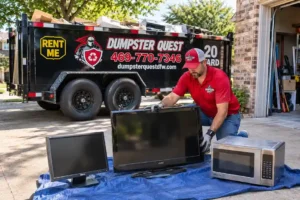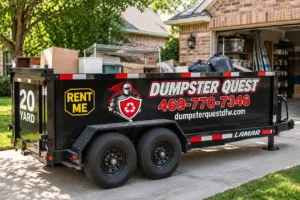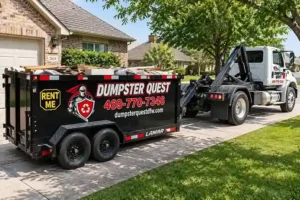
To use a dumpster properly, plan the load before the container arrives, put heavy and flat items in first, break down furniture and boxes, fill the gaps with small debris, and keep everything level with the top edge. Spread weight evenly from front to back, keep prohibited items out, and track heavy materials against the 2 ton allowance. A Dumpster Quest 20 yard dumpster holds about 6 to 8 pickup truck loads and costs $390 for 2 days with delivery, pickup and up to 2 tons included.
Key Takeaways
- Heavy, flat items (doors, sheet goods, countertops) go in first as a base layer.
- Break down furniture and flatten boxes; air is the biggest waste of space in any dumpster.
- Keep the load level with the top edge so the container can be tarped and hauled.
- The 2 ton allowance is reached fast with concrete, dirt, roofing shingles and tile; overage is $100 per ton.
- Prohibited items must stay out of the container.
- Wear gloves and closed shoes, and never climb inside the container to compress debris.
What should you do before the dumpster arrives?
Preparation decides how smoothly the two days go. Do these two things before delivery.
Pick a level drop spot and keep a clear path
Choose a flat, paved spot, normally the driveway, with a straight approach for the truck and nothing overhead. Dumpster Quest delivers on rubber-tired equipment, so driveway placement is the standard. The driveway safe placement page covers clearance and surface protection in detail.
Place the container as close to the work as you can. Carrying debris 40 feet across a yard doubles the labor of a cleanout.
Sort what you are throwing away
Walk the house or job site and group the debris into three piles: heavy and flat, bulky furniture, and loose or bagged material. This takes 20 minutes and sets the loading order. It is also the moment to pull out anything that cannot go in the container at all, which is covered below.
How should you load a dumpster efficiently?
Load a dumpster efficiently by building layers: heavy and flat on the bottom, broken-down bulk in the middle, small debris in the gaps, and an even spread front to back. The order matters more than how hard you pack.
What to load first: heavy, flat and bulky items
Start with the heaviest flat pieces. Old doors, plywood, drywall sheets, countertops, metal shelving and flattened cabinets form a stable floor that other debris can sit on. Heavy items on top of light items crush the load unevenly and leave hollow pockets underneath.
Break down furniture and flatten boxes
Unscrew table legs, pull drawers out of dressers, take bed frames apart and flatten every cardboard box. An intact sofa can take up a quarter of a 20 yard container; broken into cushions, frame and legs it takes a fraction of that. A cordless drill and a pry bar handle most of this work.
Fill gaps with smaller debris
Once the bulky layer is in, push bagged trash, insulation, small branches and loose trim into the voids around and under the big pieces. Walk the sides of the container and look for pockets of air. Every gap filled is space you do not pay for twice.
Spread weight evenly from front to back
Keep the heaviest material distributed along the length of the container rather than piled at one end. An uneven load shifts during the lift and on the road. It also makes the container harder to set back down safely at the yard.
What can you not put in a dumpster?
Hazardous and regulated materials cannot go in a roll-off dumpster. That includes paint, solvents, motor oil, batteries, tires, propane tanks, refrigerants and appliances containing them, and anything flagged as household hazardous waste.
Collin County and most North DFW cities run household hazardous waste collection programs for these items. For everything that is accepted, see our guide to what you can put in a dumpster.
How do you keep an eye on weight?
Track weight by material type, not by how full the container looks. The Dumpster Quest package includes 2 tons; anything over that is billed at $100 per ton after the load is weighed.
The volume limit and the weight limit are separate, and heavy material hits the weight limit long before the container looks full. Use the table below as a planning guide.
| Material | Approximate weight | What it means for a 2 ton allowance |
| Household junk and furniture | Light | A full container usually stays under 2 tons |
| Cardboard, insulation, trim | Very light | Volume runs out before weight |
| Roofing shingles | Heavy | Roughly 20 to 25 squares reaches 2 tons |
| Concrete, brick, tile, dirt | Very heavy | A few feet of depth can exceed 2 tons |
If your project is mostly concrete or dirt, read about overweight fees and weight limits and the concrete loading guidance before you start, or call (469) 770-7346 so the load can be planned around the allowance.
What safety rules should you follow when loading a dumpster?
Wear gloves, closed-toe shoes and eye protection, and lift with a partner for anything over about 50 pounds. The National Institute for Occupational Safety and Health (NIOSH) lifting guidance uses 51 pounds as the upper limit for a two-handed lift under ideal conditions, and cleanout conditions are rarely ideal.
Never climb into the container to stomp debris down. Nails, glass and shifting loads are the common injury sources on a cleanout. Keep children and pets away from the drop zone, and do not lean ladders against the container walls.
How full is too full?
Level with the top edge, nothing sticking out. A container piled above the rim cannot be tarped or hauled safely, and the driver may have to leave it or remove the overflow. The full breakdown of the fill line, volume versus weight, and what happens with an overfilled container is in our post on how full you can load a dumpster.
Using a Dumpster Properly Comes Down to Order, Weight and the Top Edge
Knowing how to use a dumpster properly saves space, keeps the crew safe and avoids the two charges that catch people out: extra days and extra tons. Sort first, load heavy and flat, break everything down, fill the gaps, spread the weight, and stop at the rim. For a 20 yard Dumpster Quest container, that is about 6 to 8 pickup truck loads of well-packed debris. If you need to know how many loads fit for a specific project, we have a breakdown of loads by job type.
Planning a Cleanout? Book the Container and Load It Right
Planning a cleanout? Book a 20 yard dumpster for $390 for 2 days, with delivery, pickup and up to 2 tons included. Call (469) 770-7346 or book through our contact page.
Frequently Asked Questions
1. What should go in a dumpster first?
Heavy, flat items go in first: doors, plywood, drywall, countertops and flattened cabinets. They create a stable base that bulky and loose debris can sit on without leaving hollow pockets. Save bagged trash and small debris for filling gaps.
2. Can I put furniture and mattresses in the dumpster?
Furniture is accepted and should be broken down into parts before loading. Mattress acceptance varies, so call (469) 770-7346 before loading one.
3. Can I mix concrete with other debris?
Yes, but concrete reaches the 2 ton allowance within a few feet of depth, and every ton over is $100. Keep concrete to a thin, even layer across the floor rather than a pile at one end. For a mostly concrete job, call first so the load can be planned.
4. How much can a 20 yard dumpster hold?
About 6 to 8 pickup truck loads of debris. Volume is 20 cubic yards and the weight allowance is 2 tons, and heavy materials reach the weight limit before the volume limit. A broken-down load fits far more than one with intact furniture.
5. What happens if I go over 2 tons?
$100 per ton over the 2 ton allowance, billed after the load is weighed. Light household debris rarely goes over; concrete, dirt, tile and shingles are the materials to watch. Call (469) 770-7346 if you are unsure how heavy your debris is.