Hidden dumpster rental fees are charges that don’t appear in the advertised base price: permit fees, prohibited-material fees, trip fees, overfill penalties, fuel or distance surcharges, size-upgrade fees, and overweight or extra-day charges. Most come from going past a limit in your rental agreement or from a problem on delivery or pickup day. A written fee schedule before you book is the most reliable way to avoid them.
Key takeaways
- Hidden dumpster rental fees are charges outside the advertised base price: permit, prohibited-material, trip, overfill, fuel/distance, size-upgrade, overweight and extra-day fees.
- Street, sidewalk or right-of-way placement usually needs a city permit; driveway placement usually does not.
- Trip and overfill fees are avoidable with a clear placement area and a load kept below the container walls.
- No federal rule requires all-in dumpster pricing, so a written fee schedule is the best protection.
- Dumpster Quest DFW includes delivery and pickup, charges $100/ton over 2 tons and $20 per extra day, and has no size-upgrade fee.
What does a dumpster rental base price usually cover?
A base price usually covers the container, a set rental period, a weight allowance, and, with many providers, delivery and pickup. Anything outside those four limits can become an add-on charge. Some providers also bill delivery and pickup separately, so check what the base price includes before comparing quotes.
At Dumpster Quest DFW, the base price includes delivery, pickup, 2 days and 2 tons. For the full package breakdown, see how much dumpster rental costs in North Dallas.
Which hidden dumpster rental fees are most common?
The most common hidden dumpster rental fees are permit, prohibited-material, trip and overfill fees. Fuel, size-upgrade, overweight and extra-day charges are close behind. Each one has a clear trigger, and each one is avoidable.
| Fee | What triggers it | Typical charge | How to avoid it |
| Permit | Dumpster placed on a street, sidewalk, alley or public right-of-way | City permit fee, set by each city | Place it on your driveway, or get the permit before delivery |
| Prohibited material | Tires, batteries, paint, electronics or other restricted items in the load | Per-item removal fee or a rejected load | Check the accepted items list before loading |
| Trip fee | Driver can’t reach the spot for delivery or pickup | Flat fee per failed trip | Clear vehicles, gates and debris before both visits |
| Overfill | Debris stacked above the container walls | Flat fee, or excess removed before hauling | Load flat and stay below the rim |
| Fuel/distance | Address outside the hauler’s standard area, or fuel price spikes | Surcharge or mileage fee | Book a hauler that serves your city |
| Size upgrade | Swapping to a bigger container after delivery | Price difference plus an extra trip | Choose the right size upfront |
| Overweight | Debris goes over the included weight | Per-ton fee over the limit | Estimate weight for concrete, shingles and dirt |
| Extra days | Keeping the dumpster past the rental period | Daily fee | Book a package that matches your real timeline |
| Delivery & pickup | Billed separately by some haulers | Flat fee each way | Confirm the quote includes both trips |
Dumpster Quest DFW pricing: delivery and pickup are included, weight over 2 tons is $100 per ton, extra days are $20 each, and there’s no size-upgrade fee because every rental uses the same 20-yard rubber-tired trailer.
When does a dumpster need a permit?
A dumpster usually needs a city permit only when it sits on a public street, sidewalk, alley or right-of-way. Placement on your private driveway typically doesn’t need one. The rules come from city right-of-way ordinances, not a single Texas statewide rule, so they differ between North DFW cities. Your HOA may also have its own placement rules.
Placing a dumpster without a required permit can lead to a fine or a forced move. Check your city’s rules before delivery, or see our guide to dumpster rental permits in North DFW.
What is a prohibited material fee?
A prohibited material fee applies when restricted items end up in the load. Common examples are tires, batteries, paint, electronics, appliances that contain refrigerant, and other household hazardous waste. Landfills can reject a load that contains them, which means sorting, an extra trip or both.
The EPA’s household hazardous waste guidance explains why these items need separate disposal. Our acceptable disposal items list shows what can go in a Dumpster Quest DFW trailer.
What is a dumpster trip fee?
A trip fee is charged when the driver arrives but can’t complete a delivery or pickup, usually because a vehicle, gate, low branch or debris blocks the spot. The truck still burned the fuel and driver time, so the provider bills for the wasted trip. Clearing the placement area before both your delivery and pickup windows prevents it.
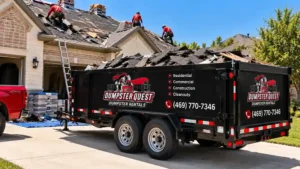
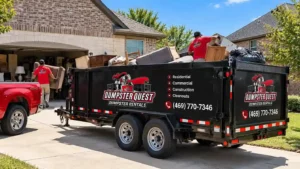
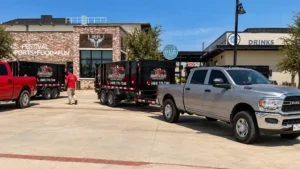
Dumpster Quest DFW’s driveway-safe rubber-tired trailers need a clear, level spot about 14 ft long by 7 ft wide, plus room for the truck to back in.
What is an overfill fee?
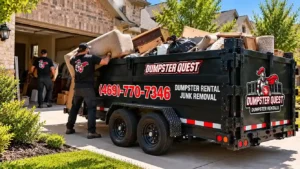
An overfill fee applies when debris is loaded above the top of the container walls. An overfilled load can shift or fall off during transport, so many haulers will either charge a fee or ask you to remove the excess before they leave. Loading flat and keeping everything below the rim avoids it.
What are fuel, distance and size-upgrade fees?
These are situational fees that apply only in specific cases:
- Fuel or distance surcharges: some providers charge more for addresses far from their yard, or add a fuel surcharge when fuel prices spike.
- Size-upgrade fees: switching to a bigger container after delivery usually costs the price difference plus another trip. Dumpster Quest DFW rents one 20-yard size, so this doesn’t apply.
How do overweight and extra-day charges fit in?
Overweight and extra-day charges are the two add-ons tied directly to how you use the dumpster. At Dumpster Quest DFW, weight over the 2-ton allowance is $100 per ton and each day past your package is $20.
Dense debris like concrete, shingles and dirt causes most weight overages, because haulers pay landfills and transfer stations by the ton through tipping fees. In Collin County, those facilities include ones run by the North Texas Municipal Water District (NTMWD). For a full breakdown, read our guide to how dumpster overweight fees are calculated.
Do residential and commercial projects face different hidden fees?
Yes. Commercial and construction projects face more hidden-fee risk. Job sites change, access can be blocked by equipment or deliveries, and heavier debris is more likely to trigger overweight charges. Residential cleanouts have fewer access problems but are more likely to include prohibited household items like paint, electronics or old appliances.
How do you avoid hidden dumpster rental fees?
Ask for the full fee schedule in writing before you book, not just the base price. Each step below targets one fee from the table above:
- Permit: check your city’s and HOA’s rules if the dumpster can’t go on your driveway.
- Prohibited material: review the accepted items list before loading anything you’re unsure about.
- Trip fee: clear the placement area before both delivery and pickup.
- Overfill: keep debris below the top of the container walls.
- Fuel/distance: confirm your address is inside the provider’s standard service area.
- Overweight and extra days: estimate weight and timeline realistically.
- Hidden fees in general: check the provider’s billing track record, for example on the Better Business Bureau.
Are dumpster companies required to disclose all fees upfront?
Not under a specific federal rule. The FTC’s 2024 Rule on Unfair or Deceptive Fees covers only live-event tickets and short-term lodging. In Texas, deceptive pricing falls under the general Deceptive Trade Practices–Consumer Protection Act (Tex. Bus. & Com. Code §17.41 et seq.). A written quote is still your best protection.
Want a quote that shows every possible charge upfront? Call Dumpster Quest DFW at 469-770-7346 or contact us online before you book.
Frequently asked questions
1. What hidden fees should you watch for when renting a dumpster?
The most common hidden fees are permit fees, prohibited-material fees, trip fees and overfill penalties, along with overweight and extra-day charges. Fuel surcharges and size-upgrade fees can also apply in some cases. Ask for a written fee schedule before you book.
2. Do you need a permit to put a dumpster in your driveway?
Usually not. Permits are typically required only for placement on a public street, sidewalk, alley or right-of-way. Rules vary by city and HOA, so check before delivery if the driveway isn’t an option.
3. What happens if a dumpster company can’t reach the dumpster for pickup?
Most providers charge a trip fee when a delivery or pickup fails because the spot is blocked. Keeping the area clear of vehicles, gates and debris on pickup day avoids the charge and a delayed haul.
4. Can a dumpster company charge you for overfilling?
Yes. Many haulers charge an overfill fee, or ask you to remove excess debris, when the load sits above the container walls. Overfilled loads aren’t safe to transport, so keep everything below the rim.
5. What items cause extra fees in a dumpster?
Tires, batteries, paint, electronics, refrigerant-containing appliances and other hazardous waste usually trigger fees or a rejected load. Check the provider’s accepted items list before loading.
6. Are delivery and pickup included in a dumpster rental quote?
It depends on the provider; some bill them as separate fees. Dumpster Quest DFW includes delivery and pickup in every package.