Many people underestimate concrete’s weight, leading to overfilled dumpsters, extra fees, or failed pickups. This blog is for homeowners, contractors, and construction crews handling concrete disposal. It explains how much concrete a dumpster can hold based on weight capacity, helping you choose the right size, avoid overage charges, and ensure safe hauling.
Planning Safe and Efficient Concrete Disposal
Understanding how much concrete can a dumpster hold is essential for avoiding costly mistakes during construction, renovation, or demolition projects. One of the most common errors is focusing on dumpster size instead of weight capacity. Because concrete is extremely dense, a dumpster can reach its load capacity long before it appears full, leading to overage fees, safety risks, or rejected pickups.
Knowing the actual weight capacity helps you plan disposal more accurately, choose the right container size, and keep your project on schedule. For example, in areas like North Dallas, experienced providers such as Dumpster Quest can help guide you on proper load limits and ensure you select the right dumpster for heavy debris like concrete.
Why Dumpster Weight Limits Matter for Concrete Disposal
Concrete is far heavier than most people expect, so exceeding a dumpster’s maximum allowable weight can quickly create expensive and avoidable problems. When loads go over the allowed capacity, it often leads to additional charges, operational delays, and safety concerns during transport and handling.
What can happen if you exceed load capacity:
- Additional overage fees from the hauler
- Delayed or refused pickups
- Increased safety risks during loading and transport
- Potential damage to equipment, driveways, or surrounding property
Why understanding capacity is important:
- Ensures efficient and safe loading practices
- Supports accurate project and budget planning
- Helps you avoid unexpected costs and delays
- Improves overall job site safety and compliance
For both contractors and homeowners, understanding dumpster maximum payloads is a critical step in managing concrete disposal effectively and avoiding setbacks.
Concrete Dumpster Capacity by Size
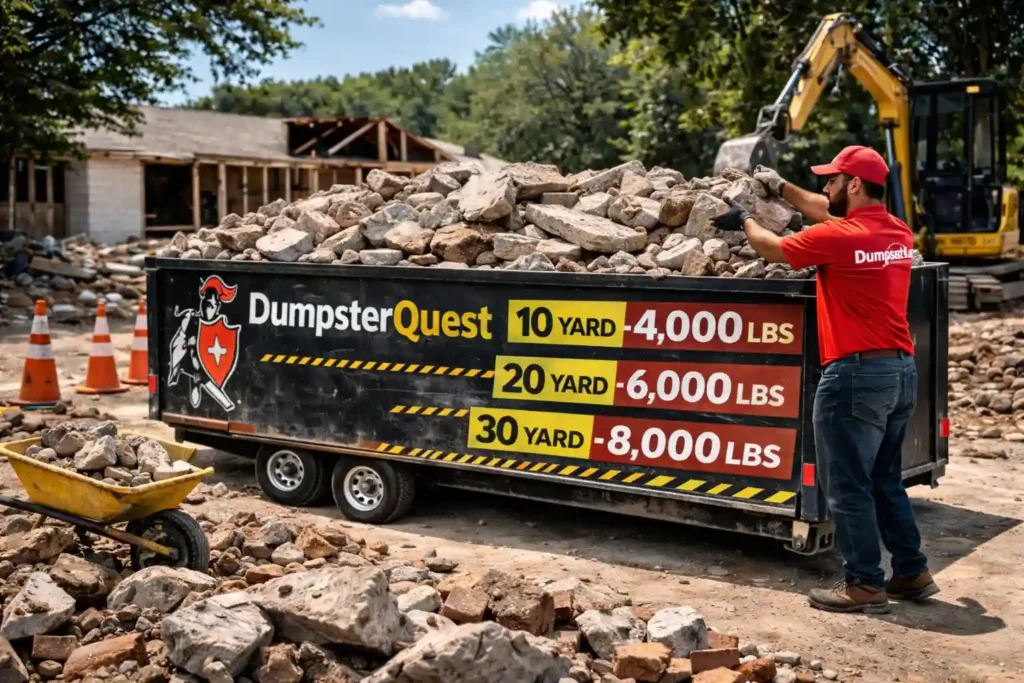
10 Yard Dumpster
- Holds approximately 2 to 4 tons of concrete
- Best for small-scale projects like patios, sidewalks, or minor demolition work
- Ideal when space is limited but heavy debris still needs removal
15 Yard Dumpster
- Holds approximately 3 to 5 tons of concrete
- Well-suited for medium-sized projects such as driveway removal or small foundation work
- Offers a balance between capacity and job site flexibility
20 Yard Dumpster
- Holds approximately 4 to 6 tons of concrete
- Commonly used for larger residential or renovation projects
- Suitable for heavier loads, but weight still needs careful monitoring
30 Yard Dumpster
- Generally not recommended for pure concrete disposal
- Often restricted due to disposal weight allowance rather than available space
- Typically used for mixed debris rather than dense materials like concrete
Understanding these capacity ranges helps ensure you choose the right dumpster size, avoid overloading, and keep your disposal process efficient and compliant. For projects involving concrete dumpster rental North Dallas, this becomes especially important, as proper planning helps match heavy debris requirements with the right container to ensure safe and cost-effective disposal.
Concrete Dumpster Size and Weight Capacity Guide
| Dumpster Size | Typical Weight Limit | Concrete Capacity | Best Use |
| 10 Yard | 2 to 4 tons | Partial fill | Patios, sidewalks |
| 15 Yard | 3 to 5 tons | Moderate loads | Driveways |
| 20 Yard | 4 to 6 tons | Larger loads | Renovations |
| 30 Yard | Varies | Limited for concrete | Mixed debris |
How to Estimate Concrete Load Capacity Accurately
- Measure Your Project Area: Estimate square footage and thickness of concrete to calculate total volume and weight.
- Convert Volume to Weight: Concrete weighs roughly 150 pounds per cubic foot. This means even small volumes can quickly become heavy.
- Plan for Partial Loads: Avoid filling dumpsters completely when dealing with concrete. Load capacity is reached faster than volume limits.
- Consider Multiple Hauls: Large projects often require multiple pickups instead of a single oversized dumpster.
- Consult Professionals: Working with experts ensures accurate estimates and prevents mistakes.
Expert Insight from Dumpster Quest
Based on real-world experience, Dumpster Quest highlights that most customers underestimate how quickly concrete adds up in weight.
Common issues include:
- Overfilling dumpsters
- Misjudging material weight
- Choosing oversized containers
Their recommendation:
- Use smaller dumpsters for heavy debris
- Load evenly to distribute weight
- Plan ahead for multiple hauls
This ensures safer and more cost-effective disposal.
How Much Concrete Can a Dumpster Hold for Efficient Project Planning and Cost Control
Understanding dumpster capacity for concrete is essential for managing heavy debris safely and cost-effectively, especially when working with a concrete disposal dumpster rental. Because concrete is extremely weight-dense, relying on volume alone can easily lead to overloading, unexpected fees, and project delays. By focusing on weight threshold instead of perceived space, you can prevent overage charges, improve safety during loading and transport, and keep your project running on schedule with fewer disruptions. For concrete dumpster rental projects, providers like Dumpster Quest offer tailored dumpster solutions designed specifically for heavy materials like concrete, ensuring proper loading, compliance, and efficient disposal from start to finish.
Get the Right Dumpster for Your Concrete Project
Concrete removal doesn’t have to be complicated, just plan it right and use the right equipment to avoid costly delays and overload issues. Make your project easier with your trusted partner for reliable dumpster rentals built for heavy debris and construction jobs. Get expert help choosing the right size and stay within a safe load limit from start to finish.
Ready to get started? Visit the Dumpster Quest homepage or contact their team today for a fast quote and hassle-free rental.
Frequently Asked Questions
1. What Is a Concrete Dumpster and When Do You Need One?
A concrete dumpster is a specialised container designed for heavy materials like concrete, brick, and asphalt. You need one during demolition, driveway removal, or construction projects where standard dumpsters cannot safely handle the weight.
2. What Size Dumpster Do I Need for Concrete?
Most projects use 20 yard dumpsters. Smaller containers are preferred because they help manage hauling limits more effectively and reduce the risk of overloading.
3. How Much Does a Concrete Dumpster Rental Cost?
Concrete dumpster rental typically ranges from $300 to $900 depending on size, capacity limits, location, and rental duration. Heavier loads and longer rentals may increase costs.
4. Can You Put Concrete and Other Debris in the Same Dumpster?
In many cases, concrete must be separated from other materials. Mixing debris can result in additional fees or require a different type of dumpster based on local disposal regulations.
5. Do Concrete Dumpsters Have Strict Weight Limits?
Yes, they are designed with strict limits to ensure safe transportation. Exceeding these limits can lead to overage charges and safety concerns.
6. Can You Fill a Dumpster Completely With Concrete?
No, most dumpsters cannot be filled completely with concrete because they will exceed maximum limits before reaching full capacity.
Key Takeaways
- Concrete dumpsters are limited by weight, not volume
- 10 to 20 yard dumpsters are most commonly used
- Smaller dumpsters help prevent overloading
- Concrete weighs about 150 pounds per cubic foot
- Planning ahead avoids extra fees and delays