Foreclosure cleanouts often involve large amounts of abandoned furniture, household junk, and property debris, making it difficult to choose the right dumpster size for the job. This is for homeowners, investors, landlords, property managers, and real estate professionals handling foreclosure property cleanups. Choosing the correct dumpster size based on the amount of debris and property condition helps avoid overspending and ensures a faster, more efficient cleanup.
Choosing the Right Dumpster Size for an Efficient Foreclosure Cleanout
What dumpster size do I need for a foreclosure cleanout” is one of the many questions during a foreclosure cleanout. Many properties contain years of accumulated clutter that must be removed quickly before repairs, inspections, or resale can begin. One of the biggest challenges during these projects is choosing the correct dumpster size, too small can delay cleanup and increase costs, while an oversized container may create unnecessary expenses. Understanding the size needed for a foreclosure cleanout helps homeowners, investors, property managers, and contractors plan more effectively.
Essential Dumpster Loading Tips for Foreclosure Cleanouts
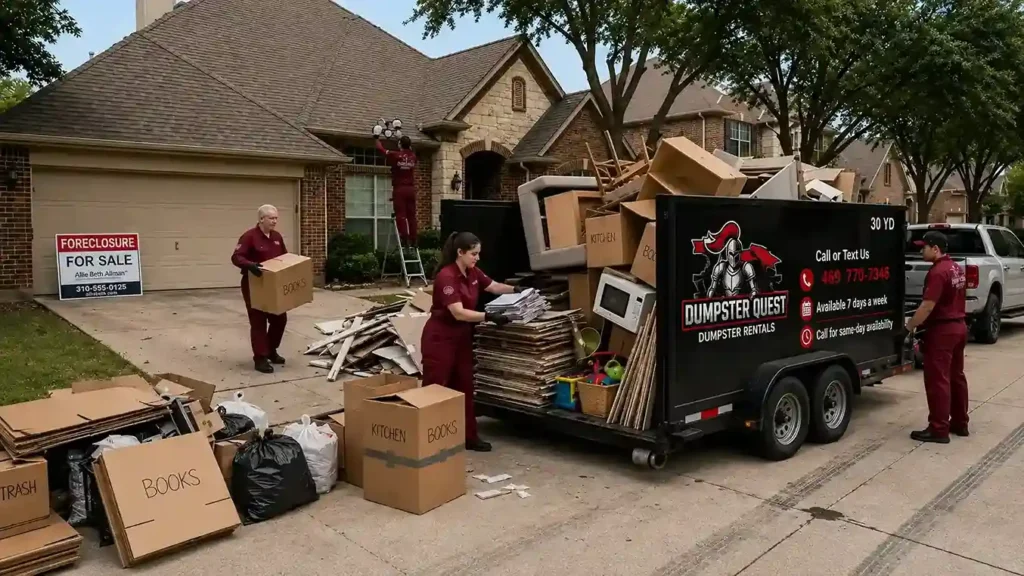
Effective dumpster loading for foreclosure property debris removal starts with a clear strategy that helps maximise space, improve safety, and streamline the removal process. Organising debris before and during loading ensures the dumpster is used efficiently and reduces the risk of needing additional hauls or rentals.
Foreclosure cleanouts typically include a wide mix of materials, such as:
- Furniture
- Appliances
- Clothing
- Storage clutter
- Renovation debris
- Yard waste
- Damaged flooring
- Cabinets and fixtures
Dumpster rental for foreclosure cleanup projects often generate significantly more waste than standard residential cleanouts because abandoned properties can contain years of accumulated belongings, making proper loading techniques essential for faster and more cost-effective cleanup.
Why Proper Dumpster Organisation Matters During a Cleanout
Understanding the best way to organize a dumpster for cleanout directly impacts project speed and overall cost.
Poor dumpster planning can lead to:
- Overflowing debris
- Additional rental costs
- Multiple hauls
- Delayed property turnover
- Unsafe loading conditions
Proper organisation improves:
- Loading efficiency
- Cleanup speed
- Weight distribution
- Dumpster capacity usage
Foreclosure cleanouts often involve time-sensitive schedules, especially when preparing properties for sale or rental.
Recommended Dumpster Sizes for Foreclosure Cleanouts
Choosing the right dumpster size depends on the property size, debris volume, and overall condition of the foreclosure. Below is a simple breakdown to help match the container size to the scope of the cleanout.
10-Yard Dumpster for Small Foreclosure Cleanouts
Best suited for light-duty cleanouts with minimal debris. Ideal for:
- Small apartments
- Minor property cleanups
- Light furniture removal
- Limited household junk
A 10-yard dumpster is a good option when waste volume is low and the cleanout can be completed quickly.
20-Yard Dumpster for Standard Foreclosure Cleanouts
The most commonly used size for foreclosure projects. Ideal for:
- Two to three-bedroom homes
- Moderate furniture disposal
- General household junk
- Flooring and light renovation debris
A 20-yard dumpster typically holds about six pickup truck loads, making it a reliable choice for most standard cleanouts.
30-Yard Dumpster for Large Foreclosure Cleanouts
Designed for heavier and more complex cleanouts with significant debris. Ideal for:
- Large homes
- Hoarding situations
- Multi-room cleanouts
- Post-renovation debris removal
A 30-yard dumpster provides extra capacity for bulky items and high-volume waste.
40-Yard Dumpster for Major Property Cleanouts
Best for the largest and most demanding foreclosure projects. Ideal for:
- Commercial foreclosures
- Large estate properties
- Severe damage cleanups
- Full-scale renovation debris
A 40-yard dumpster offers maximum capacity for extensive, high-volume cleanouts where efficiency and space are critical.
How to Load a Cleanout Dumpster Efficiently
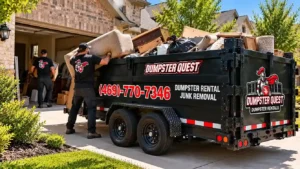
Loading a dumpster efficiently is key to maximising space and keeping foreclosure cleanouts organised, safe, and cost-effective. A structured approach helps you fit more debris into a single container and avoid unnecessary extra hauls.
Load Large Furniture First
Begin by placing heavy, bulky items at the bottom to form a stable base. This typically includes:
- Sofas
- Cabinets
- Tables
- Mattresses
Starting with these items helps anchor the load and create structure for everything else.
Break Down Bulky Materials
Whenever possible, disassemble furniture and break down large items before loading. Flatten boxes, dismantle shelving, and reduce oversized materials to eliminate wasted space.
Place Flat Debris Along the Walls
Long, flat materials should be positioned vertically along the dumpster walls to maximise usable space in the centre. This includes:
- Drywall
- Plywood
- Doors
This technique helps keep the load compact and organised.
Fill Gaps with Smaller Debris
Once larger items are placed, use smaller materials to fill empty spaces. Items like loose household junk, bags of clutter, and small debris help prevent wasted gaps and improve overall capacity.
Balance Weight Distribution
Spread heavy materials evenly throughout the dumpster rather than concentrating them in one area. Proper weight distribution improves safety during transport and reduces the risk of loading or hauling issues.
Typical Foreclosure Cleanout Dumpster Recommendations
| Property Type | Recommended Dumpster Size |
| Apartment or Condo | 10 Yard |
| Small Home | 20 Yard |
| Medium Family Home | 20 to 30 Yard |
| Large Property | 30 Yard |
| Heavy Hoarding Situation | 30 to 40 Yard |
These recommendations vary depending on debris density and furniture volume.
Expert or Brand Insight
Based on foreclosure cleanout projects throughout North Dallas, Dumpster Quest has found that many customers underestimate the amount of waste hidden inside foreclosure properties.
Common surprises include:
- Garage clutter
- Attic debris
- Water-damaged furniture
- Carpet removal
- Appliance disposal
- Exterior junk piles
One of the most effective strategies for house cleanout dumpster loading tips is choosing slightly larger dumpsters when uncertainty exists. In many cases, a larger container prevents the need for a second haul and helps complete the project faster. Another major factor is loading organisation, customers who follow proper loading strategies almost always maximise container space more effectively and keep the cleanout process more efficient.
Common Mistakes or Questions
Common foreclosure cleanout mistakes include:
- Choosing dumpsters that are too small
- Ignoring weight limits
- Overloading above the fill line
- Failing to sort debris
- Delaying dumpster scheduling
- Blocking dumpster access during loading
Avoiding these problems improves efficiency and reduces project delays.
What Dumpster Size Do I Need for a Foreclosure Cleanout for Better Property Turnover
Choosing the best dumpster size for abandoned property cleanout helps homeowners, landlords, and property managers complete cleanup projects faster while avoiding unnecessary expenses and delays.
A properly sized container streamlines debris removal, reduces the need for additional hauls, speeds up preparation for resale or renovation, and promotes a safer, more organised work environment throughout the entire process.
For foreclosure projects throughout North Dallas, working with Dumpster Quest helps simplify dumpster selection, scheduling, and debris removal planning.
Get Reliable Dumpster Help for Foreclosure Cleanouts
Need a dumpster for a foreclosure cleanup project?
Explore Dumpster Quest for dependable dumpster rentals, flexible scheduling, and fast delivery throughout North Dallas.
For project recommendations or scheduling assistance, visit the contact us page today.
Frequently Asked Questions
1. What size dumpster do I need when moving out?
Most move-out cleanouts use 10 to 20-yard dumpsters depending on furniture volume and household debris.
2. How many loads does a 20-yard dumpster hold for a house cleanout?
A 20-yard dumpster usually holds about six pickup truck loads of mixed residential debris.
3. Do I need a permit to put a dumpster in my driveway when moving?
Most private driveway placements do not require permits, but street placement rules vary by municipality.
4. How does same day dumpster delivery for moving work?
Same-day delivery allows dumpsters to arrive within hours based on local availability and scheduling.
5. What dumpster size is best for downsizing a home?
Most downsizing projects use 20-yard dumpsters because they balance capacity and affordability well.
Key Takeaways
- Choose a 20–30 yard dumpster for most foreclosure cleanouts to ensure you have enough capacity for mixed household debris and furniture.
- Upgrade to a 40-yard dumpster for large homes, estates, or properties with heavy accumulation or multi-room cleanup needs.
- Load the dumpster strategically by placing heavy and large items first, then filling gaps with smaller debris.
- Keep materials organised during loading to improve space usage and speed up the overall cleanup process.
- When in doubt, select a slightly larger dumpster to avoid overfilling and prevent costly additional hauls.