Dumpster rental is one of the most efficient ways to manage waste for residential, commercial, and construction projects. Whether you are clearing out a home, renovating a property, or handling large-scale debris, understanding how dumpster rental works can save you time, money, and unnecessary stress.
Dumpster Rental Made Simple: Efficient Waste Solutions for Safer, Smoother Projects
A good rental plan does more than remove waste. It helps keep a job site safe, improves workflow, reduces disposal headaches, and makes project planning easier from start to finish. When you choose the right size, understand pricing, and follow local disposal rules, you are far less likely to run into delays, overage charges, or avoidable logistical problems.
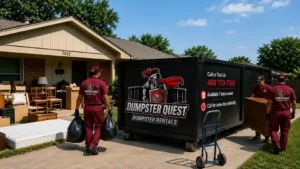
For homeowners, real estate professionals, contractors, and property managers across North Dallas, a well-timed dumpster rental can make the difference between an organised project and one that constantly falls behind. Providers such as Dumpster Quest are often used for this reason, especially when flexibility, scheduling, and clear communication matter.
Dumpster rental provides a centralised solution for waste disposal during cleanouts, renovations, landscaping work, and construction projects. Choosing the right size, understanding pricing factors, planning placement, and following disposal rules can significantly reduce costs and improve efficiency. Standard roll off dumpsters are the most common format, and the best option depends on your project scope, debris type, and timeline.
Dumpster Rental: What It Is and Why It Matters Today
Modern projects generate more waste than most people expect. A garage cleanout can uncover years of forgotten furniture, boxes, and broken household items. A bathroom remodel creates drywall, tile, flooring, fixtures, and packaging waste. A roofing project can generate thousands of pounds of shingles in a very short period of time.
Without a structured disposal plan, debris tends to pile up quickly. That creates safety risks, slows down labour, and often forces repeated trips to disposal facilities. A dumpster solves that problem by creating one designated place for waste from the beginning of the project.
This matters because good waste management supports more than convenience. It improves job site safety, keeps projects moving, and can support better recycling and materials handling practices. Construction and demolition materials represent a major waste stream, which is why temporary containers remain one of the most practical solutions for projects that create large volumes of debris.
For homeowners and businesses across North Dallas, working with Dumpster Quest provides a practical way to keep projects organised and on schedule.
What Is Dumpster Rental
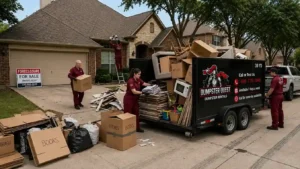
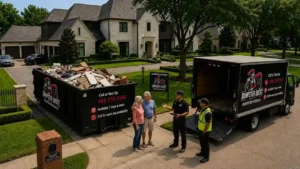
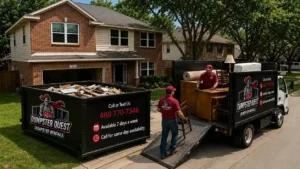
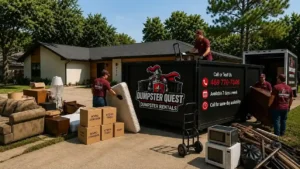
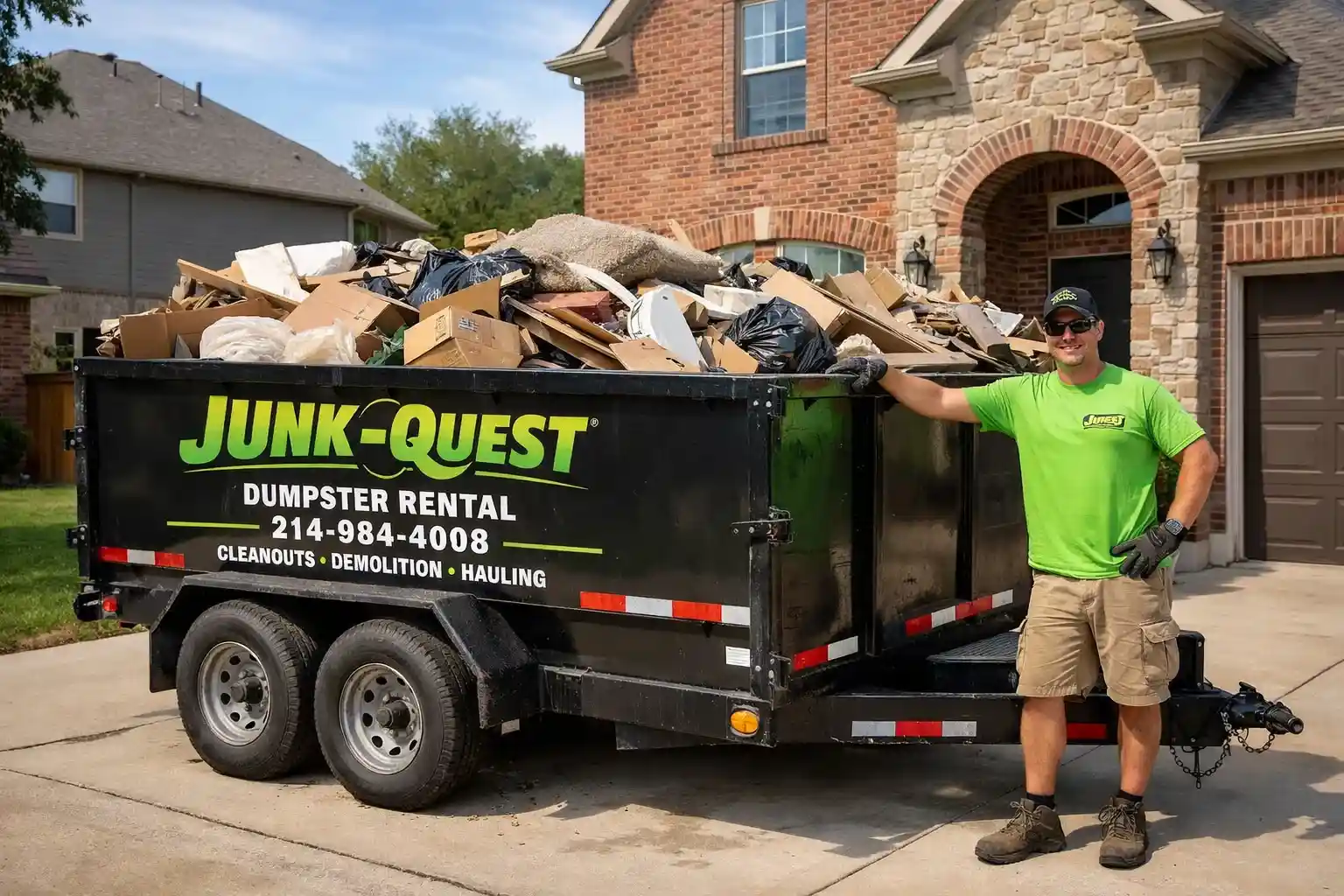
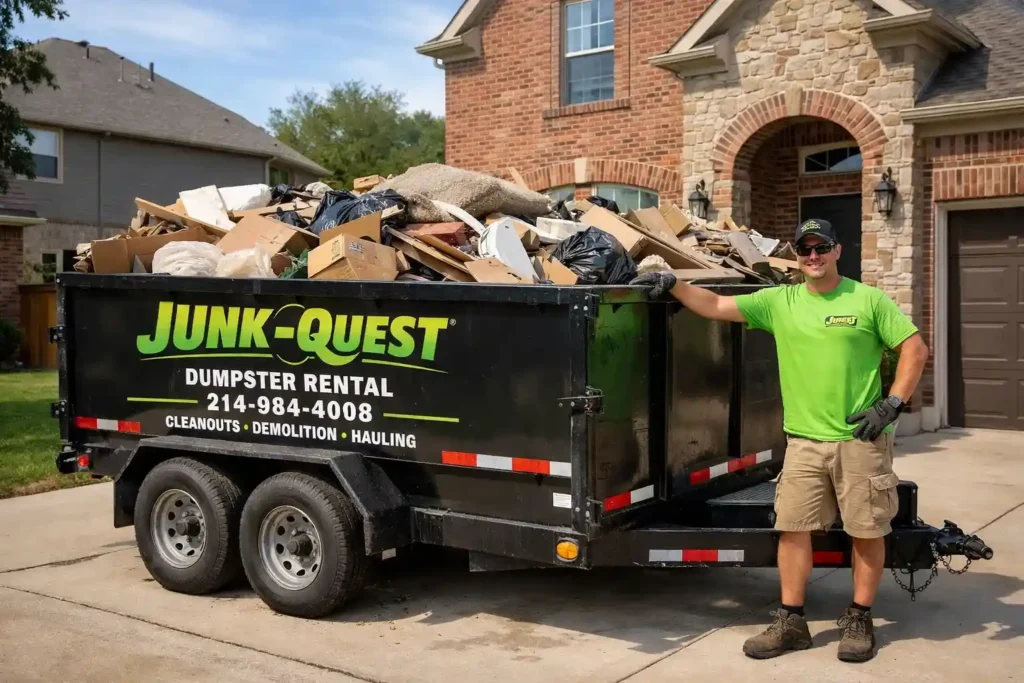
Dumpster rental is a service in which a waste container is delivered to your location for temporary use, then collected and hauled away after it is filled or when your rental period ends. Most projects use roll off dumpsters, which are delivered on specialised trucks and rolled into place on a driveway, lot, or job site.
These services are commonly used for:
- Home cleanouts
- Renovation projects
- Construction jobs
- Yard and landscaping work
- Office or retail cleanups
- Heavy debris disposal
The most common format is the roll off dumpster because it is flexible, temporary, and suitable for one-time or project-based use. If you want a more detailed breakdown of size and pricing, this roll off dumpster rental costs sizes and how it works guide supports that topic well.
A dumpster rental service typically includes delivery, a set rental period, pickup, and disposal within a specified weight allowance. Some rentals also include basic guidance on placement, acceptable materials, and extension options if your project takes longer than expected.
Why Dumpster Rental Matters
Waste management affects every stage of a project. When debris is unmanaged, it creates clutter, slows labour, and increases the chance of accidents. When it is managed correctly, work becomes more efficient and the site stays cleaner and safer.
Without a dumpster
- Debris accumulates quickly
- Workspaces become harder to navigate
- Disposal takes more labour and transport time
- Scheduling becomes less predictable
With a dumpster
- Waste is centralised
- Cleanup can happen continuously instead of at the end
- Loading is easier for crews and homeowners
- Project pacing improves
For contractors and property managers, a dumpster often becomes part of the project workflow rather than just a cleanup tool. It allows demolition, removal, sorting, and hauling to happen in a controlled way. For homeowners, it removes the stress of figuring out where everything should go.
It also helps with presentation. A renovation or cleanout with organised disposal simply looks more professional. That matters for business properties, rental turnovers, and homes being prepared for sale.
Benefits and Types of Dumpster Rental
Not every project needs the same type of container. One of the biggest advantages of dumpster rental is that it can be matched to the scale and material type of the job.
Residential Dumpster Rental
Residential dumpster rentals are ideal for homeowners handling garage cleanouts, downsizing, renovation debris, moving preparation, attic or shed cleanups, and general decluttering. These jobs usually involve mixed household waste, bulky items, and a moderate volume of debris.
If your project is home-based, this residential dumpster rental costs sizes and home project guide is a useful supporting resource.
Residential projects benefit from on-site disposal because cleanup can happen steadily over several days instead of becoming a last-minute problem. It is especially useful when a project uncovers more waste than expected, which is common during remodels and cleanouts.
Construction Dumpster Rental
Construction dumpsters are built for heavier, sharper, and bulkier materials. Common loads include wood, drywall, subflooring, tile, roofing materials, insulation, cabinetry, and framing debris. Weight and material type matter much more on construction jobs than on basic household cleanouts.
For project-specific support, see this construction dumpster rental costs weight limits and project guide.
Construction projects often move in phases. Demolition, framing, roofing, flooring, and finish work all create different debris streams. Renting the right container keeps those phases moving without creating clutter that slows down crews or creates safety issues.
Commercial Dumpster Rental
Commercial dumpster rentals are often used for office cleanouts, retail renovations, warehouse clearouts, tenant improvements, and one-time business cleanup projects. They help businesses maintain cleaner spaces and support faster turnaround during remodels or transitions.
For related support, this commercial dumpster rental costs sizes and business use guide fits naturally into that cluster.
Commercial projects often require tighter scheduling, clear access planning, and a more professional presentation. A well-managed dumpster rental supports all three.
Yard Waste Dumpster Rental
Yard waste dumpsters are useful for landscaping work, storm cleanup, branch removal, seasonal yard clearing, and outdoor renovation projects. Organic waste can build up faster than expected, especially after trimming, removal, or storm recovery.
For more detail, this yard waste dumpster rental costs sizes and landscaping project guide is a relevant internal companion.
Yard projects often create light but bulky debris. That means volume matters just as much as weight. Branches, brush, and bagged organic waste can fill a container quickly even if they do not seem especially heavy.
Concrete and Heavy Debris Dumpsters
Concrete, brick, dirt, and similar materials are dense enough to create weight-limit issues very quickly. These loads usually require special handling or smaller container strategies because weight becomes the limiting factor before volume does.
For deeper loading and weight guidance, see this concrete dumpster rental near me costs weight limits and loading guide.
These rentals are less about volume and more about safe transport. A smaller container for concrete is often the correct choice even if the project feels large.
Dumpster Rental Pricing Guide
A clear dumpster rental pricing guide helps you compare options more accurately. Pricing usually depends on a combination of container size, rental duration, included weight, debris type, and site logistics.
Key Pricing Factors
Dumpster size
Larger containers usually cost more, but they may still be more economical if they prevent multiple hauls.
Rental duration
A standard rental window is often included. Extra days may increase cost.
Type of debris
Dense materials like concrete or roofing shingles affect pricing differently than general household junk.
Location and accessibility
Difficult delivery conditions, longer transport distances, or restricted placement areas may affect total cost.
Weight limits
Many rentals include a weight allowance. Going over that limit can trigger overage charges.
Typical Cost Breakdown
| Dumpster Size | Project Type | Average Cost Range |
| 10 yard | Small cleanouts or heavy debris | $300 to $450 |
| 20 yard | Medium renovations | $400 to $600 |
| 30 yard | Large home projects | $500 to $750 |
| 40 yard | Construction projects | $600 to $900 |
These are broad planning ranges, not fixed rates. Local availability, debris type, and project conditions can shift pricing either way.
For expanded cost context, this roll off dumpster rental costs sizes and how it works page supports the pricing side of your topic cluster.
What Often Changes the Final Price
A rental quote may look simple at first, but several real-world factors can change the final number:
- Extra rental days
- Overweight loads
- Special handling for prohibited or restricted items
- Street placement that requires permits
- Delivery challenges such as narrow access or obstructed placement
That is why comparing prices without understanding the included terms can be misleading. Clear pricing is usually better than the lowest quoted base rate.
Roll Off Dumpster Sizes Explained
Choosing the right size is one of the most important decisions in the rental process. A dumpster that is too small may lead to overfilling, wasted labour, or a second rental. A dumpster that is too large may increase cost unnecessarily.
Common Roll Off Dumpster Sizes
10 yard dumpster
Best for small cleanouts, dense debris, and tight spaces. Good for minor renovation work, dirt, brick, or a single-room declutter.
20 yard dumpster
A common residential option for medium-sized renovations, flooring projects, moderate cleanouts, and landscaping work.
30 yard dumpster
Well suited for large home cleanouts, multi-room renovations, bulky furniture removal, and larger mixed debris projects.
40 yard dumpster
Usually used for major construction, commercial cleanouts, and large-volume projects where capacity matters more than footprint.
Understanding roll off dumpster sizes helps you plan loading strategy, estimate total volume, and avoid preventable extra costs.
A Practical Way to Choose Size
A useful way to think about size is not just square footage of the property, but how many bulky or heavy items you expect to remove. A full-house cleanout with furniture, boxes, and mattresses is very different from a remodel that mainly produces drywall and flooring.
When people underestimate size, the most common result is either overfilling or needing a second container. In many cases, stepping up one size is more economical than trying to save money on a smaller bin that fills too quickly.
How To Choose Dumpster Rental Effectively
Consider Your Project Scope
Before renting, estimate what kind of debris you will generate and how much of it there will be. A small bathroom update and a full estate cleanout are not comparable. Project type should always guide container choice.
Choose The Right Size
If you are unsure between two sizes, the slightly larger option may be the better value if it prevents overflow or second-haul costs. That said, with dense materials like concrete, larger is not always better because weight limits matter more than volume.
Understand Rental Duration
Rental periods should match project timelines as closely as possible. If you expect weather delays, permit delays, or phased work, build some flexibility into the schedule.
Check Disposal Rules
Not every material should go into a general dumpster. Household hazardous waste such as paints, cleaners, oils, batteries, and pesticides requires special handling and should not be mixed into ordinary disposal streams.
Plan Placement
Driveways are the most common placement area, but the surface must be accessible and suitable for the container. If street placement is required, some municipalities may require permits or impose placement rules.
Think About Loading Order
The most efficient loading strategy is to place flat and heavy items first, then fill gaps with smaller debris. This helps stabilise the load, saves space, and reduces the risk of reaching the fill line too early.
Residential Dumpster Rental Tips
Good loading habits improve efficiency and reduce waste-related problems.
- Break down bulky items to save space
- Place heavier items at the bottom
- Spread loads evenly
- Avoid throwing prohibited materials into mixed debris
- Keep the fill line visible and avoid overloading
- Load large flat debris along the walls when possible
These residential dumpster rental tips help maximise container space and reduce the chance of overage or pickup issues.
It also helps to work room by room. A structured cleanout is easier to manage than random loading, and it makes it easier to decide what should be kept, donated, recycled, or discarded.
Affordable Dumpster Rental North Dallas
Finding an affordable dumpster rental North Dallas option is not just about locating the lowest price. It is about finding the best overall value for your project needs.
Look for:
- Transparent pricing
- Realistic weight allowances
- Flexible rental periods
- Reliable delivery schedules
- Local knowledge
- Clear disposal guidance
Many customers choose Dumpster Quest because local expertise and scheduling reliability can matter just as much as base rate.
Affordable does not always mean cheapest. A lower initial quote can become more expensive if it excludes delivery, weight, or enough rental time. The most useful approach is to compare total expected cost, not just the starting number.
Smart Usage Strategies That Save Time and Money
A lot of dumpster rental cost control comes down to planning.
Load Continuously, Not All at Once
If debris is loaded as the project progresses, the site stays safer and cleaner. This is especially useful for renovations and construction projects.
Separate Recyclable Materials Where Practical
Materials such as concrete, metal, and some wood products may be recyclable depending on local handling options. Keeping those streams cleaner can support more responsible disposal and reduce contamination.
Avoid Prohibited Items
One hazardous item or restricted material can create unnecessary disposal complications. Always confirm disposal rules before loading questionable materials.
Schedule Delivery Close to Actual Project Start
Getting a dumpster too early can waste included rental days. Delivery should support the real project timeline, not just the planning stage.
Do Not Underestimate Weight
Concrete, roofing materials, dirt, and brick can become expensive fast if weight limits are ignored.
Use the Dumpster as a Workflow Tool
A dumpster works best when it is placed where debris is created, but without blocking access. Good placement improves efficiency for both loading and final pickup.
Expert Insight From Dumpster Quest
From a practical standpoint, one of the most common mistakes people make is underestimating total waste volume. Customers often choose smaller dumpsters to save money, only to end up needing extra hauls or replacements later.
Another common issue is failing to think through debris type. General household clutter, roofing shingles, drywall, and concrete all behave differently in a dumpster. Working with providers like Dumpster Quest helps align container size, material type, and rental duration more accurately, which usually reduces total project cost.
A third issue is timing. Projects frequently run longer than expected, especially when weather, contractor schedules, or unexpected demolition discoveries are involved. Building a little flexibility into the rental period can reduce a lot of stress.
Common Mistakes to Avoid
- Choosing a dumpster that is too small
- Overloading beyond weight limits
- Mixing prohibited materials
- Poor placement planning
- Delaying scheduling
- Ignoring rental duration
- Assuming all debris types cost the same to dispose of
- Failing to ask about weight allowances
Avoiding these issues helps create a smoother, more cost-effective experience.
Environmental Impact and Responsible Disposal
Proper disposal does more than remove clutter. It supports better environmental outcomes when materials are sorted and managed appropriately.
Many materials can be recycled or diverted, including:
- Metal
- Concrete
- Wood
- Some cardboard and packaging
Responsible disposal matters because construction, renovation, and cleanup projects can produce materials that do not belong in standard mixed waste streams. Careful handling can reduce landfill impact and support local recycling practices where available.
For homeowners and contractors, that means asking better questions before loading. If a material may be hazardous, restricted, or recyclable, it is worth checking before it goes into the container.
Dumpster Rental: Final Thoughts for Smarter Waste Management
Dumpster rental simplifies waste removal for projects of all sizes. By understanding sizes, costs, rental periods, debris rules, and loading strategy, you can make informed decisions that save time and money.
Whether you are a homeowner clearing clutter, a real estate professional preparing a property, or a contractor managing debris, the right container makes cleanup more efficient and far easier to control.
A well-planned dumpster rental supports more than disposal. It improves workflow, reduces site hazards, keeps projects moving, and creates a cleaner, more manageable environment from beginning to end.
Get a Fast Reliable Dumpster Rental in North Dallas
If you need a simple way to manage waste for your next project, working with a reliable local provider can make the process more predictable.
Explore your options with Dumpster Quest to better understand sizes, pricing, and scheduling. If you want project-specific guidance, visit the contact us page to request more information.
Frequently Asked Questions
1. What does a roll off dumpster rental cost?
Roll off dumpster rental typically ranges from $300 to $900 depending on size, location, debris type, and included weight. Larger dumpsters and heavy materials often increase costs. For a deeper breakdown, see this roll off dumpster rental costs sizes and how it works guide.
2. How does residential dumpster rental pricing work?
Residential pricing is usually based on container size, rental duration, disposal type, and weight allowance. Many providers use flat-rate pricing with extra charges only if you exceed the included terms. This residential dumpster rental costs sizes and home project guide explains common cost variables in more detail.
3. What can you put in a construction dumpster?
Construction dumpsters usually accept wood, drywall, flooring, roofing materials, insulation, and general construction debris. Hazardous materials such as chemicals, paints, solvents, and asbestos are typically not allowed. This construction dumpster rental costs weight limits and project guide adds more detail about acceptable materials and loading concerns.
4. Commercial dumpster rental near me?
Commercial dumpster rentals are commonly available for one-time cleanouts, retail remodels, office upgrades, and warehouse clearing. Businesses usually benefit from scheduling efficiency and centralised disposal rather than repeated haul-off trips.
5. What is a yard waste dumpster and how does it work?
A yard waste dumpster is designed for organic debris like leaves, branches, brush, and landscaping waste. It is delivered to your property, filled during the project, and collected afterward. For related use cases, this yard waste dumpster rental costs sizes and landscaping project guide offers a more project-specific breakdown.
6. What is a concrete dumpster and when do you need one?
Concrete dumpsters are used for dense materials like concrete, brick, and dirt. They are needed for demolition, hardscape removal, and similar heavy-debris projects where weight limits are critical. This concrete dumpster rental near me costs weight limits and loading guide explains when these specialised containers make the most sense.
Key Takeaways
Proper planning improves safety, efficiency, and overall project control
Dumpster rental simplifies waste management for residential, commercial, and construction projects
Choosing the right size prevents extra costs and delays
Pricing depends on size, duration, debris type, and weight
Roll off dumpsters are the most common option
Hazardous and restricted materials require separate handling