Flooring Removal in McKinney Means More Debris Than You Planned For
New floors are one of the most satisfying upgrades you can make to a home. The process of getting there is less satisfying. Pulling up old flooring — especially tile with a mortar bed, or multiple layers of material stacked over decades — creates a debris load that surprises most McKinney homeowners the first time they tackle it.
It’s heavy, it’s bulky, and your standard trash service won’t take it. Before you start prying up planks or chipping tile, it’s worth having a plan for where it all goes. A dumpster rental on-site from day one is what keeps a flooring project from turning into a logistics problem.
Why Flooring Debris Is Heavier Than It Looks
Flooring removal is one of those jobs where the weight-to-area ratio catches people off guard. A 1,500 square foot home doesn’t sound like a massive project until the debris is piled in the driveway.
Here’s why it adds up:
Ceramic and porcelain tile is dense material. A standard 12×12 tile weighs roughly 3 to 4 pounds per square foot — before you factor in the mortar bed underneath, which can add another 3 to 5 pounds per square foot. Pull tile from 800 square feet and you’re moving close to three tons before the job is done.
Hardwood flooring is lighter than tile but still significant — around 2 to 4 pounds per square foot depending on species and thickness. Engineered hardwood is lighter; solid oak or hickory adds up quickly.
Carpet and padding is lighter per square foot but extremely bulky. It rolls up into heavy, awkward tubes that are difficult to load without a proper container on-site.
Laminate and vinyl plank is the lightest option but still generates significant volume. Underlayment, staples, and old adhesive backing add to the load.
Concrete subfloor or self-leveling compound — if your project involves grinding down high spots or removing a poured underlayment, that’s some of the heaviest material in any renovation project. Call ahead before loading large quantities of concrete.
The Tile Council of North America estimates that a standard tile installation with mortar bed can weigh 15 to 20 pounds per square foot when removed. For a typical McKinney home tackling a full first-floor tile replacement, that’s a multi-ton job.
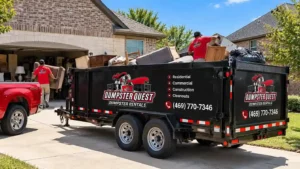
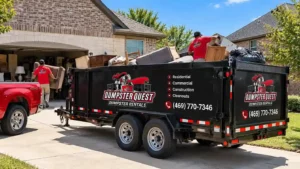
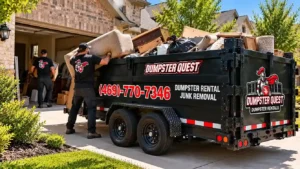
What Goes in the Dumpster Quest Dump Trailer
For flooring removal projects in McKinney and across Collin County, here’s how debris breaks down:
Accepted:
- Ceramic, porcelain, and natural stone tile
- Mortar and thinset (reasonable quantities — see note on weight below)
- Hardwood, engineered hardwood, and bamboo flooring
- Laminate and vinyl plank flooring
- Carpet and carpet padding
- Underlayment and vapor barrier
- Staples, tack strips, and transition pieces
- Subfloor plywood and OSB
- Baseboards and trim
Needs a heads-up or separate handling:
- Large concrete quantities — self-leveling compound, thick mortar beds, or concrete subfloor removal can push weight limits fast. Call Dumpster Quest at 469-770-7346 before loading to discuss your specific project.
- Asbestos floor tiles — 9×9 inch vinyl floor tiles installed before 1980 are a known asbestos risk. McKinney has a significant number of homes built in the 1960s and 70s where this applies. The Texas Commission on Environmental Quality (TCEQ) requires licensed abatement for asbestos-containing materials — this cannot go in a standard dump trailer.
- Adhesive residue and cutback adhesive — the black adhesive used under older vinyl tile may also contain asbestos. Test before grinding or scraping if the home predates 1980.
How to Stage a Flooring Removal Project in McKinney
Getting the debris out efficiently is as much about sequencing as it is about manpower. Here’s how to approach it:
Step 1 — Book the Dumpster Quest trailer before demo starts
Schedule your dumpster rental to arrive the morning flooring removal begins. McKinney homes vary in layout — think through where the trailer parks relative to the rooms you’re working in. A longer carry from back bedrooms to the front driveway adds time; positioning the trailer to minimize that distance matters on a full-home project.
Step 2 — Start with carpet if present
Carpet comes up fastest and clears floor space for the harder work. Cut it into manageable strips — 3 to 4 foot wide rolls are easier to carry than full-width sections. Pull tack strips and staples as you go so they don’t end up underfoot.
Step 3 — Tile and mortar next
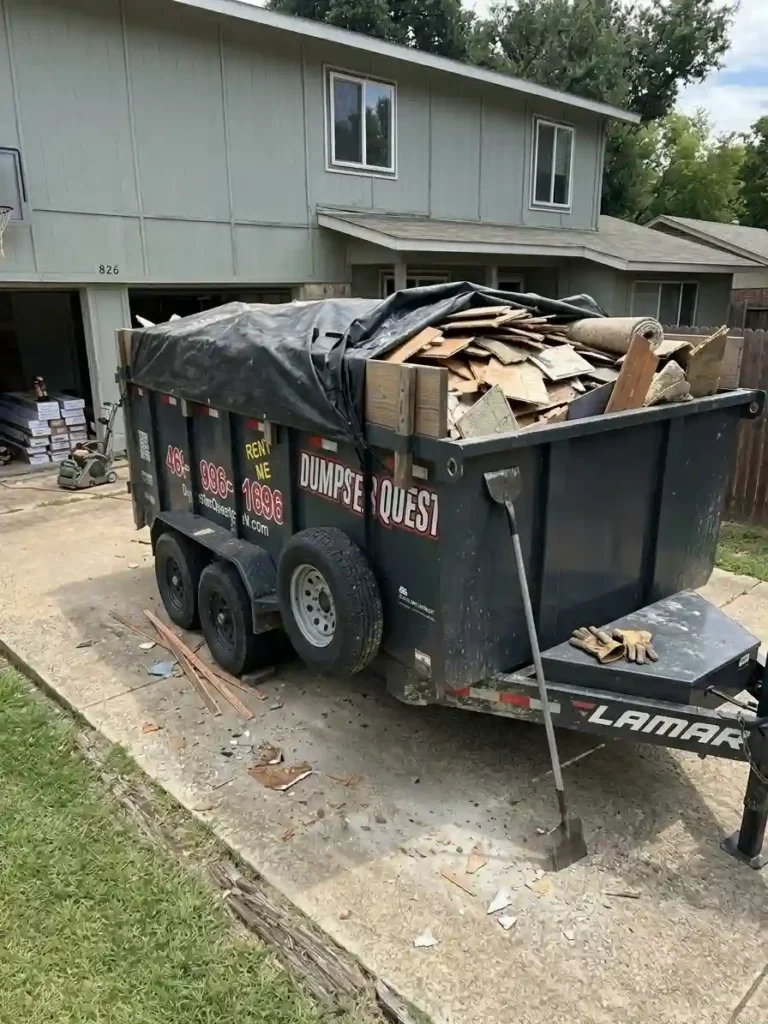
This is the heaviest and most labor-intensive phase. Work in sections, cracking tile into manageable pieces and shoveling mortar debris directly into buckets or a wheelbarrow for transfer to the trailer. Load heavy tile and mortar in the bottom of the trailer — not on top of lighter materials already loaded.
Step 4 — Hardwood and laminate
Pry up planks working with the grain direction. Hardwood can often be salvaged and donated if it’s in good condition — Habitat for Humanity ReStores in the North Texas area accept used hardwood flooring and keep it out of the waste stream entirely.
Step 5 — Subfloor and underlayment last
If the subfloor is coming up too, this goes last. Plywood and OSB panels load flat and stack efficiently in the trailer.
The Weight Conversation — Why It Matters for McKinney Flooring Projects
One thing that’s worth understanding before a flooring removal project: dump trailers have weight limits, and tile with mortar is one of the fastest ways to approach them.
A 20-yard trailer has significant capacity by volume, but a full load of dense tile and mortar can hit weight limits before the trailer looks full. This is especially relevant for McKinney homeowners tackling whole-first-floor tile replacement in larger homes.
The practical solution is to mix debris types — load tile and mortar alongside lighter materials like carpet, underlayment, and trim — rather than front-loading only the heaviest material. If your project is primarily tile across a large area, a conversation with Dumpster Quest before booking helps set expectations on whether a single load or a swap-out plan makes more sense.
Driveway-Safe Delivery in McKinney
Dumpster Quest delivers rubber-wheeled dump trailers that sit on tires rather than steel tracks. For McKinney driveways — stamped concrete, pavers, and standard asphalt — that means no cracking, no scratching, and no damage to decorative surfaces. The trailer looks the same on pickup day as it did on delivery day.
Serving Flooring Removal Projects Across McKinney and Collin County
Dumpster Quest delivers 20-yard dump trailers for flooring removal projects throughout McKinney (75069, 75070, 75071), Allen, Frisco, Plano, Prosper, Celina, Wylie, Anna, and surrounding Collin County communities. Locally based in Allen, TX.
📞 Call or text: 469-770-7346 🕐 Available 6:00 AM – Midnight, 7 days a week
Frequently Asked Questions
It depends heavily on the material. Tile with mortar is the heaviest — up to 8 to 9 pounds per square foot when removed. Carpet and laminate are significantly lighter. For a whole-home project mixing material types, a 20-yard dump trailer handles most McKinney homes comfortably.
Can I put old hardwood flooring in the dump trailer?
Yes. If the hardwood is in decent condition, consider donating it to a local Habitat for Humanity ReStore first — it keeps usable material out of the waste stream. If it’s past saving, it goes in the trailer with no issue.
If your home was built before 1980 and has 9×9 inch vinyl tiles, there is a real possibility they contain asbestos. Don’t grind, sand, or break them before testing. The TCEQ has guidance on testing requirements and licensed abatement contractors in Texas.
Yes, same-day delivery is available based on current availability. Call 469-770-7346 early in the day to confirm. Dumpster Quest serves all McKinney zip codes — 75069, 75070, and 75071.
Mix heavier materials like tile and mortar with lighter debris like carpet, underlayment, and trim. If your project is primarily dense tile across a large area, call us before booking to discuss a swap-out plan.
Part of the Dumpster Quest renovation waste removal series for Collin County. See related posts for bathroom renovation debris, kitchen remodel cleanout, and deck demolition guides.
Key Takeaways
- Flooring removal in McKinney generates more debris than expected, especially with heavy materials like tile and mortar.
- A flooring removal dumpster is essential for managing the debris efficiently throughout the project.
- Different materials have varying weights, with ceramic tile being the heaviest and options like carpet being lighter but bulkier.
- Homeowners should schedule dumpster rentals beforehand and plan the removal process in stages for best efficiency.
- For carpet and tile removal, consider donating usable materials before disposal to reduce waste.