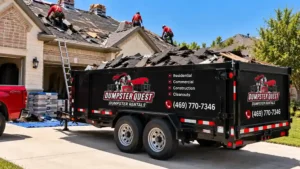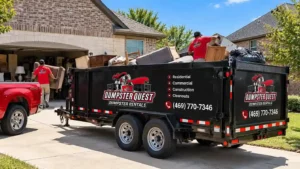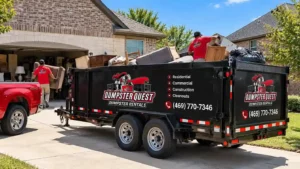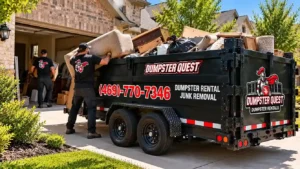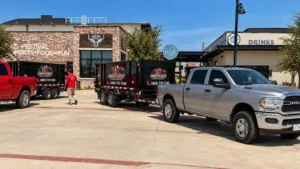
Planning a kitchen remodel in McKinney, Frisco, Allen, or anywhere in Collin County? This guide covers everything you need to know about renting a dump trailer for kitchen demo debris — from how much waste a full gut-out generates to what can and can’t go in the trailer. Dumpster Quest delivers driveway-safe 20-yard rubber-wheeled dump trailers across Collin County with same-day availability and flexible rental periods.
What to Do With All That Kitchen Demo Debris in Collin County
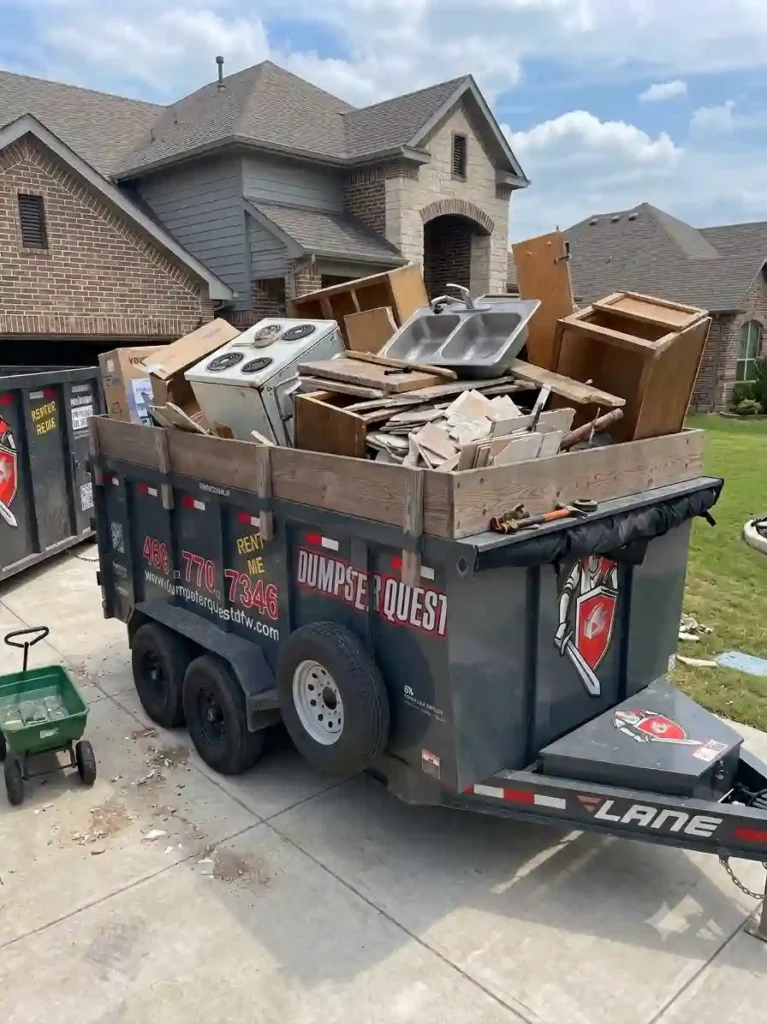
Kitchen remodels are the most popular home improvement project in Collin County right now — and for good reason. But there’s a part of the process that doesn’t make it into the contractor proposal or the design mood board: where does everything go when you tear it out?
Old cabinets, stone countertops, tile, drywall, appliances, flooring — a full kitchen gut-out generates more debris than most homeowners expect. And unlike moving boxes or old furniture, you can’t just leave it at the curb.
Here’s what you actually need to know before demo day.
How Much Debris Are We Talking?
More than you’d think. A typical full kitchen gut in a Collin County home — say 250 to 350 square feet — generates somewhere between one and a half to three tons of mixed material. That includes:
Cabinets — upper and lower boxes, doors, shelves, and hardware. Even basic builder-grade cabinets are bulky and heavy once they’re off the wall.
Countertops — granite and quartz slabs are some of the heaviest material you’ll pull out of a kitchen. Laminate is lighter but still bulky. Either way, they don’t break down easily.
Tile — floor tile, backsplash, and the mortar bed underneath. Tile is deceptively heavy. A modest backsplash doesn’t seem like much until it’s in a pile on the floor.
Drywall — any wall or ceiling work generates gypsum board, joint compound, and tape. It adds up fast in an open-concept kitchen where walls are coming down.
Flooring — hardwood, vinyl, or tile under the toe kicks and cabinets usually gets replaced during a full kitchen remodel. Factor that into your debris estimate.
Appliances — the old range, dishwasher, and microwave all need to go. Refrigerators are a separate conversation (more on that below).
Put it all together and you’re looking at a significant haul — the kind that makes a single trip to the dump in your truck feel optimistic.
What Goes in the Dump Trailer and What Doesn’t
Most kitchen demo debris is straightforward to dispose of. A few items need special handling.
Accepted in the trailer:
- Cabinet boxes, doors, shelves, and hardware
- Countertops — granite, quartz, laminate, tile, butcher block
- Ceramic and porcelain tile (floor and backsplash)
- Drywall and plaster
- Hardwood, laminate, and vinyl flooring
- Lumber and wood trim
- Sinks and faucets
- Ranges, dishwashers, and microwaves
Needs separate handling:
- Refrigerators and Freon-containing appliances — these require certified disposal because of the refrigerant. Don’t load them in the trailer. Most appliance retailers offer haul-away on delivery of the new unit, which is the easiest option.
- Hazardous materials — old paint cans, cleaning chemicals, anything stored under the sink that you wouldn’t want in a landfill
- Concrete in large quantities — if your project involves significant concrete work, call ahead. Weight limits apply and it affects pricing.
One thing that catches people off guard: pre-1980 homes. If your Collin County home was built before 1980, there’s a chance some materials — particularly certain floor tiles and drywall compounds — may contain asbestos. Worth a quick test before demo if there’s any doubt. That material can’t go in a standard trailer and requires licensed disposal.
How to Make Demo Day Less Chaotic
The difference between a clean, efficient demo and a chaotic one usually comes down to staging.
Have the trailer on-site before demo starts. Debris goes straight in as you pull things off the wall, instead of piling up in the garage or front yard and getting moved twice. This sounds obvious but it’s the single biggest time-saver on demo day.
Pull cabinets before countertops. Upper cabinets first, then lower cabinets, then countertops. This gives you room to work and keeps the loading sequence logical.
Break down cabinet boxes. Remove doors and shelves and break down the boxes so they lie flat. You’ll fit significantly more in the trailer and avoid wasted airspace from boxy items stacked at odd angles.
Heavy stuff goes in first. Stone countertops, tile, and heavy flooring go on the bottom of the trailer. Lighter debris — drywall scraps, trim, packaging — fills the gaps on top. Keeps the load stable and maximizes capacity.
Flag the fridge early. Decide ahead of time how you’re handling the refrigerator. Whether you’re selling it, giving it away, or arranging haul-away with the appliance store, get that sorted before demo day so it’s not sitting in the middle of the floor blocking the workflow.
The Driveway Question
One thing Collin County homeowners ask about constantly: will the trailer damage the driveway?
It’s a legitimate concern, especially in neighborhoods where stamped concrete and paver driveways are common. Traditional steel roll-off containers sit on steel tracks that can crack or scratch decorative concrete surfaces.
Rubber-wheeled dump trailers distribute weight through tires the same way a vehicle does. The driveway looks the same after pickup as it did before delivery. For most homes in McKinney, Allen, Plano, and the rest of Collin County, that’s worth knowing before you book.
How Long Will You Need the Trailer?
Kitchen remodels in Collin County typically run two to six weeks from demo to completion, depending on the scope and contractor availability. The trailer doesn’t need to stay the whole time — most people keep it through demo and rough-in, then schedule pickup once the heavy debris phase is done.
If things run long (and they often do), extending the rental period is straightforward. The key is communicating your timeline when you book so there’s a plan in place.
Frequently Asked Questions
For most full gut-outs in Collin County — cabinets, countertops, flooring, drywall, and appliances — yes. A 20-yard trailer handles the majority of complete kitchen remodels without running out of space mid-demo.
Yes. Stone countertops are accepted. They’re heavy, so if your entire load is primarily stone, mention it when you book so weight limits can be factored in.
Refrigerators contain refrigerants that require special handling and cannot always be disposed of in a standard dump trailer. In some cases, we can take refrigerators to specialized recycling or disposal facilities, but this must be discussed and approved in advance. If you need to dispose of a refrigerator, please let us know before booking so we can confirm the proper disposal option for your area.
If it sits entirely on your private property, typically no permit is needed in most Collin County cities. Street placement is different — check with your city if that’s the plan.
Part of the Dumpster Quest renovation waste removal guide for Collin County. See the full series for more project-specific guides.