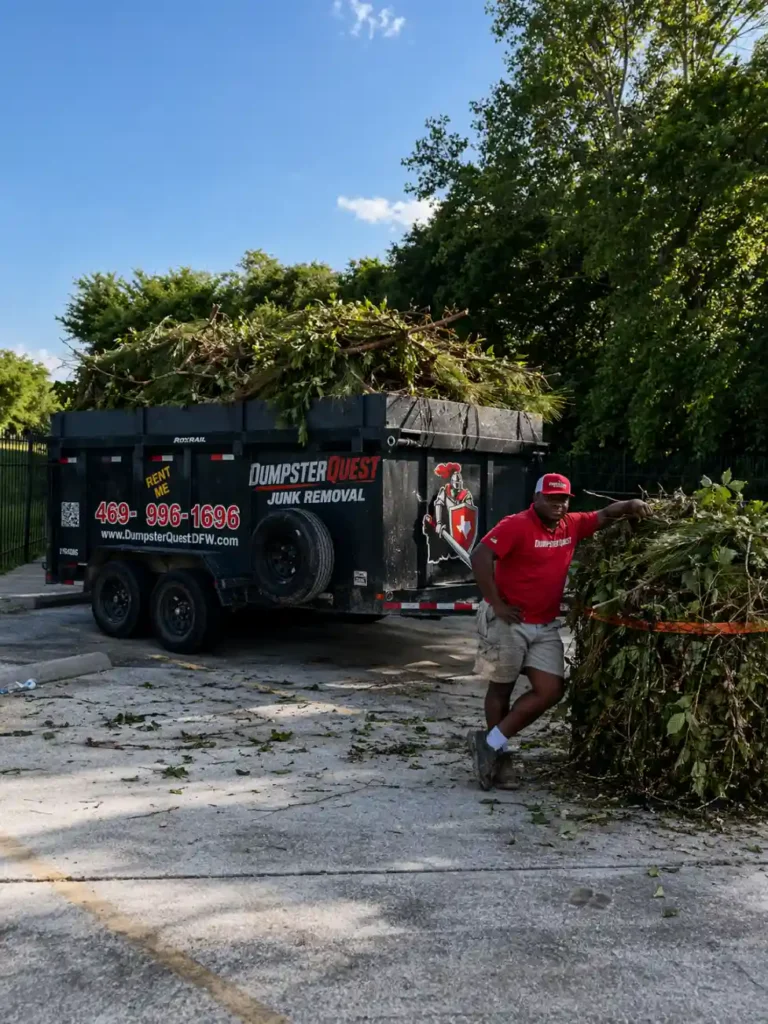
You can put most organic landscaping debris in a yard debris dumpster, including branches, leaves, grass, and shrubs. However, many people run into issues by unknowingly tossing in restricted items like hazardous materials, treated wood, or heavy debris, which can lead to extra fees or improper disposal. This quick guide is for homeowners and landscapers who want to dispose of lawn waste correctly and learn how to avoid common mistakes while staying within disposal guidelines.
The Smart Way to Manage Yard Waste Disposal
Outdoor projects frequently generate far more debris than most people anticipate, often overwhelming cleanup plans, which is why understanding what you can put in a yard waste dumpster is essential before starting. Whether you are trimming trees, clearing a yard, or handling storm damage, knowing what materials are allowed helps homeowners, landscapers, and property managers avoid delays, reduce costs, and keep projects running smoothly. For projects in North Dallas, working with providers like Dumpster Quest can also help ensure proper guidance on accepted materials and efficient waste handling.
A yard cleanup dumpster is specifically designed for organic and landscaping debris disposal, typically processed through composting or recycling facilities. Knowing this information ensures compliance with disposal rules and helps prevent unexpected charges.
Accepted Materials in a Yard Waste Dumpster
Understanding what materials are accepted in an outdoor waste dumpster helps ensure smooth disposal and prevents unnecessary fees or delays. These dumpsters are specifically intended for organic and natural debris that can be composted or processed at recycling facilities.
Common Yard Waste Materials
These are the most widely accepted items and are ideal for standard yard cleanup and maintenance projects:
- Tree branches and limbs
- Leaves and grass clippings
- Shrubs and bushes
- Garden plants and other organic debris
These materials are typically accepted because they break down easily and can be composted into reusable organic matter.
Landscaping and Natural Debris
In addition to basic yard waste, many dumpsters also allow slightly heavier or bulkier natural materials. However, acceptance may vary depending on your service provider:
- Mulch and bark
- Small roots and vines
- Untreated wood (such as natural lumber without paint or chemicals)
While these materials are generally permitted, it is important to confirm guidelines with your dumpster provider to avoid restrictions or additional charges.
Restricted or Prohibited Materials
Not everything from your yard or project site can go into a green waste dumpster. These containers are designed specifically for organic debris, and adding prohibited items can lead to extra fees, rejected pickups, or violations of dumpster rental guidelines. Understanding these restrictions helps you avoid costly mistakes and ensures proper waste handling.
Hazardous Materials
Hazardous items are strictly prohibited because they require specialized handling and disposal methods to prevent environmental contamination and health risks.
- Chemicals (such as pesticides or cleaning agents)
- Paint and paint-related products
- Fertilizers and other treated substances
These materials must be taken to designated hazardous waste facilities and should never be mixed with organic debris.
Non-Organic Waste
Yard debris dumpsters are not meant for general trash or construction debris. Mixing non-organic materials with garden waste can contaminate composting processes and often results in additional charges.
- Plastic materials (bags, containers, packaging)
- Metal items (tools, fixtures, scrap)
- Household trash or mixed garbage
Keeping these items separate ensures that your lawn waste can be properly recycled or composted.
Heavy Materials
Certain heavy materials may technically be natural but are often restricted due to weight limitations and disposal requirements.
- Large amounts of soil, dirt, or gravel
- Concrete, bricks, or masonry debris
These materials can quickly exceed dumpster weight limits and may require a separate container specifically designed for heavy debris. Always check with your provider to determine acceptable quantities and avoid overloading fees.
Yard Waste Material Guide Table
| Material Type | Allowed | Notes |
| Branches and limbs | Yes | Break down for space efficiency |
| Leaves and grass | Yes | Easy to dispose and compost |
| Shrubs and plants | Yes | Common landscaping waste |
| Mulch and bark | Usually | Confirm with provider |
| Soil and dirt | Limited | May have weight restrictions |
| Treated wood | No | Requires special disposal |
| Chemicals and paint | No | Hazardous materials |
| Household waste | No | Not suitable for yard dumpsters |
In Practice: A Yard Cleanup Case
A homeowner in North Dallas decided to clean up their backyard after a major storm. They rented an outdoor waste dumpster to dispose of broken branches, fallen leaves, and overgrown shrubs. While loading the dumpster, they also tossed in old paint cans, plastic garden pots, and a pile of soil from a landscaping project. During pickup, the provider flagged the load because of restricted materials like paint and non-organic waste, which resulted in extra fees and a delayed haul-away.
After reviewing the guidelines, the homeowner removed the prohibited items, kept only organic landscaping debris, and successfully completed the cleanup on the second pickup attempt. This example shows how understanding accepted and restricted materials can save time, money, and avoid unnecessary complications.
How to Use a Green Waste Container Effectively
- Sort Your Materials: Keep organic yard waste (branches, leaves, grass, shrubs) separate from non-organic items like plastic, metal, and household trash to avoid violations and added fees.
- Break Down Large Debris: Cut tree branches into 3–4 foot sections and bundle smaller limbs to make loading easier and maximize container space.
- Match debris to container size: Choose the right dumpster size, typically 10-yard for small yard cleanups, 15-20 yard for medium landscaping projects, and 30-yard for large property clear-outs.
- Avoid Overfilling: Keep all debris level with or below the top rim of the container to ensure safe pickup and compliance with transport rules.
- Follow Local Guidelines: Some areas restrict soil, heavy stumps, or treated wood, so always confirm accepted materials before loading.
- Work with Reliable Providers: Companies like Dumpster Quest can help you choose the correct size and ensure proper green waste disposal from start to finish.
What Can You Put in a Yard Waste Dumpster
Understanding what you can put in a yard debris dumpster helps keep your outdoor projects organized, efficient, and free from unnecessary delays or added costs. By properly sorting materials and following disposal guidelines, you can avoid extra fees and ensure faster pickups while supporting environmentally responsible yard waste removal practices. With the right knowledge, your cleanup process becomes more secure and cost-effective.
Ready to simplify your yard cleanup?
Partner with Dumpster Quest for fast dumpster delivery, flexible rental options, and dependable service you can count on. Whether you’re tackling a small yard project or a large cleanup, their team can help you choose the right solution.
Visit Dumpster Quest to explore dumpster sizes and services, or request a quote through the contact page to schedule fast delivery for your yard cleanup project.
Frequently Asked Questions
1. What is a yard waste dumpster and how does it work?
It is a specialized container used to collect organic landscaping debris such as branches, leaves, grass, and shrubs. It works by being delivered to your location, filled during your cleanup project, and then picked up by the provider, who transports the contents to composting or recycling facilities for proper disposal.
2. How Much Does a Yard Debris Dumpster Cost?
Costs typically range from $300 to $700 depending on size, location, and rental duration. Larger dumpsters and longer rental periods increase pricing.
3. What size dumpster do I need for yard debris or landscaping projects?
For most lawn waste or landscaping projects, a 10–20 yard dumpster is usually enough for small to medium cleanups like lawn maintenance or tree trimming. Larger projects such as full yard cleanouts or major landscaping work may require a 20–30 yard dumpster, depending on how much debris you have.
4. When is the best time to rent a yard debris dumpster?
The best time to rent a yard debris dumpster is before you start your project, especially during major cleanups like spring or fall yard maintenance, landscaping overhauls, or after storms when debris builds up quickly. This ensures you can manage waste as you go without delays or extra cleanup trips.
5. Can You Put Soil in a Green Waste Container?
Some providers allow small amounts of soil, but heavy loads may be restricted due to weight limits. Always confirm with your provider before disposing of soil or dirt.
Key Takeaways
- Sort your debris before loading to separate accepted yard waste from prohibited materials and avoid extra fees.
- Stick to organic materials only like branches, leaves, grass, and shrubs to ensure proper disposal and compliance.
- Check weight and volume limits early so you don’t overfill or exceed restrictions that could delay pickup.
- Confirm provider guidelines before renting to avoid surprises about what is allowed in your specific dumpster.