If you’re tackling a home cleanout, an inefficiently loaded dumpster can waste valuable space, increase disposal costs, and create safety hazards. This guide is for homeowners, landlords, and DIY renovators who want to make the most of their dumpster rental during a cleanout project. You’ll learn how to load a dumpster strategically so you can fit more debris, stay organised, and avoid unnecessary expenses.
How to Load a House Cleanout Dumpster Efficiently and Avoid Wasted Space
What is the most efficient way to load a house cleanout dumpster is a common question homeowners ask when cleanouts generate more waste than expected, from bulky furniture and broken appliances to renovation debris, storage boxes, and general household junk. Without a proper loading plan, dumpsters can fill unevenly, leaving unused space, creating safety risks, and forcing you to pay for additional hauls or rentals. Learning the most efficient way to load a house cleanout dumpster helps you maximize available space and keep the cleanup process organised.
For homeowners across North Dallas, working with Dumpster Quest helps simplify cleanouts with properly sized dumpsters and practical loading recommendations.
Why House Cleanout Dumpster Loading Tips Matter
Following proper house cleanout dumpster loading tips directly impacts both efficiency and cost.
Poor loading practices often lead to:
- Wasted dumpster space
- Overloaded containers
- Unsafe hauling conditions
- Additional rental fees
- Extra pickup charges
Efficient loading creates a safer cleanup process while improving the overall value of the rental.
Benefits of Efficient Loading
- Maximises dumpster capacity
- Reduces the need for additional hauls
- Improves project organisation
- Saves time during cleanup
- Prevents dangerous overloading
Step-by-Step Dumpster Loading Techniques for Efficient House Cleanouts
Understanding how to load a cleanout dumpster efficiently starts with proper planning before the first item is thrown away. Using the right loading strategy helps maximise dumpster space, improve safety, and reduce the likelihood of needing additional dumpster rentals.
Step 1: Sort Debris Before Loading
Before loading begins, separate debris into organised piles to streamline the cleanup process. Common categories include:
- Furniture
- Construction debris
- Recyclables
- Small household junk
Sorting materials first makes loading faster, improves organisation, and helps you place items more strategically inside the dumpster.
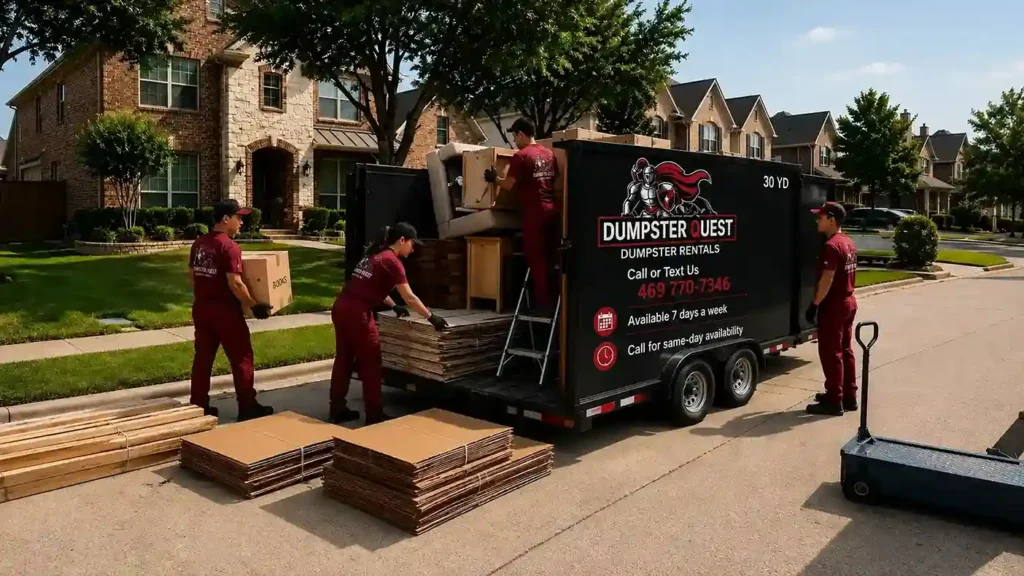
Step 2: Place Large Flat Items First
Start by loading large flat objects to create a stable and organised foundation inside the dumpster. Items such as plywood, drywall, doors, tables, shelving, and wood panels stack efficiently and help prevent shifting as additional debris is added.
Using vertical wall space also improves efficiency. Long flat materials can be positioned upright along the dumpster walls to free up valuable centre space for bulkier debris.
Step 3: Load Heavy and Bulky Items Evenly
Large furniture, appliances, and other heavy materials should go into the dumpster early in the loading process. Common examples include:
- Sofas
- Cabinets
- Mattresses
- Dressers
- Tables
Heavy items create a stable base for lighter debris, but weight should always be distributed evenly throughout the container. Avoid placing all dense materials on one side, as uneven loads can create transport safety risks, hauling issues, or rejected pickups.
Step 4: Break Down Bulky Materials
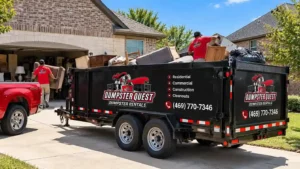
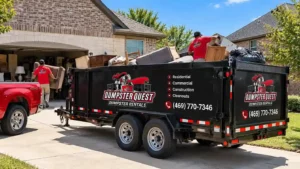
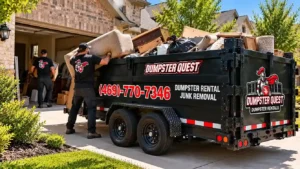
Disassembling large items creates significantly more usable dumpster space. Breaking down boxes, shelving, furniture frames, and oversized materials helps debris stack more evenly while reducing wasted air gaps inside the container.
Flattening materials whenever possible allows you to fit more debris into a single dumpster rental.
Step 5: Fill Empty Spaces With Smaller Debris
After larger items are loaded, use smaller materials to fill open gaps and maximise every available inch of space. This may include:
- Bags of clutter
- Loose household junk
- Small boxes
- Yard debris
Filling gaps keeps the dumpster organised, reduces wasted space, and helps you avoid paying for additional disposal capacity.
Step 6: Avoid Overfilling the Dumpster
Always keep debris below the dumpster’s designated fill line to ensure safe and legal transport. Overfilled dumpsters can create safety hazards, lead to additional fees, delay pickup, or require excess debris to be removed before hauling can occur.
Common House Cleanout Materials That Need Efficient Loading
House cleanout dumpsters commonly contain:
| Material Type | Loading Strategy |
| Furniture | Place first and distribute weight |
| Cardboard Boxes | Flatten and stack tightly |
| Renovation Debris | Place along walls |
| Household Junk | Fill small gaps |
| Yard Waste | Compress evenly |
These strategies improve both safety and space efficiency.
Expert or Brand Insight
Based on real cleanout projects throughout North Dallas, Dumpster Quest has found that poor loading habits are one of the most common reasons customers run out of dumpster space early.
Homeowners frequently waste capacity by:
- Tossing loose boxes randomly
- Loading lightweight debris first
- Leaving large air pockets
- Overloading one side
One of the most effective strategies, and often the best way to organize a dumpster for cleanout projects, is treating the dumpster like a moving truck instead of a random trash pile. Organised loading almost always results in more usable space, improved safety, and lower project costs. Another important insight is that many customers underestimate how much room bulky furniture actually consumes before it is broken down.
Common Mistakes or Questions
Common dumpster loading mistakes include:
- Throwing items randomly
- Ignoring weight distribution
- Overloading above the fill line
- Failing to break down furniture
- Mixing prohibited materials
- Leaving empty gaps throughout the dumpster
Avoiding these mistakes helps maximize dumpster value while improving pickup safety.
What Is the Most Efficient Way to Load a House Cleanout Dumpster for Better Project Efficiency
Understanding the most efficient way to load a house cleanout dumpster helps homeowners complete cleanouts faster while reducing costs and improving organisation. Proper loading techniques maximise available dumpster space, improve safety, and simplify the entire cleanup process.
For North Dallas residents handling move-outs, renovations, or estate cleanouts, working with Dumpster Quest helps ensure reliable dumpster solutions and practical loading support.
Get Reliable Dumpster Help for Your House Cleanout
Need help managing a large residential cleanup project?
Explore Dumpster Quest for dependable dumpster rentals, flexible scheduling, and expert cleanout guidance throughout North Dallas.
For project recommendations or scheduling assistance, visit the contact us page today.
Frequently Asked Questions
1. What size dumpster do I need when moving out?
Most move-out cleanouts use 10 to 20-yard dumpsters depending on furniture volume, household clutter, and property size.
2. How many loads does a 20-yard dumpster hold for a house cleanout?
A 20-yard dumpster typically holds around six pickup truck loads of household junk and mixed debris.
3. Do I need a permit to put a dumpster in my driveway when moving?
Most driveway placements do not require permits, but street placement may require local approval depending on municipal regulations.
4. How does same day dumpster delivery for moving work?
Same-day dumpster delivery allows customers to receive a dumpster within hours based on availability and local scheduling capacity.
5. What dumpster size is best for downsizing a home?
Most downsizing projects use 20-yard dumpsters because they balance capacity, driveway space, and affordability.
Key Takeaways
- Load your dumpster strategically to maximise available space and reduce the need for additional rentals.
- Place large and heavy items into the dumpster first to create a stable foundation for the rest of the debris.
- Use smaller debris and loose materials to fill empty gaps and minimise wasted space.
- Break down furniture, boxes, and bulky materials before loading to improve dumpster capacity.
- Distribute weight evenly throughout the dumpster to improve hauling safety and prevent transport issues.