Concrete is extremely heavy, which makes choosing the right dumpster size a challenge for homeowners and contractors. This guide explains why 10-20 yard dumpsters are usually the best choice and how to stay within weight limits to avoid overage fees.
Choosing the Right Dumpster Size for Concrete and Heavy Debris
What size dumpster do I need for concrete is a critical question when dealing with heavy debris like driveways, patios, or slabs, since concrete’s weight can quickly exceed limits and lead to extra fees or safety issues. For homeowners and contractors, choosing the right size isn’t about volume but weight, and most projects are best suited for 10-20 yard dumpsters to stay within safe hauling limits and control cost.
Key Considerations for Concrete Disposal:
- Concrete is extremely dense, so weight limits matter more than dumpster size
- Smaller dumpsters (10–20 yards) are typically safer and more cost-effective
- Overloading can result in overage fees or rejected pickups
- Proper sizing depends on your project scope and total material volume
The Cost and Safety Impact of Choosing the Wrong Dumpster Size
Choosing the wrong dumpster size for concrete can quickly create costly and avoidable problems for both homeowners and contractors. Because concrete is so heavy, even a slightly oversized load can exceed weight limits and disrupt your project timeline, making your construction dumpster rental more complicated and expensive than expected.
Common issues with the wrong size:
- Overweight fees that increase your total cost
- Unsafe loading conditions due to excess weight
- Delays from needing extra hauls or swaps
- Poor planning that leads to inefficiencies
Benefits of choosing the right size:
- Smoother, more efficient debris removal
- Compliance with hauling and weight regulations
- Better cost control and project planning
- Fewer disruptions during cleanup
Getting the dumpster size right from the start helps keep your project on schedule, within budget, and stress-free.
Concrete Dumpster Size Options and Typical Use Cases
Choosing the right dumpster size for concrete depends on how much material you’re removing and how heavy it will be once loaded. Since concrete is dense and quickly reaches weight limits, smaller dumpsters are often more practical than larger ones. Below is a breakdown of the most common dumpster sizes and when each one makes sense for residential and construction projects.
10 Yard Dumpster
Best for small, heavy-duty projects where concrete is the main material.
- Use cases: Small patios, sidewalk removal, minor demolition
- Typical capacity: 2-4 tons of concrete. This is the most commonly recommended size for pure concrete because it stays within weight limits more safely than larger containers.
15 Yard Dumpster
A good middle-ground option for slightly larger residential jobs.
- Use cases: Medium driveways, larger patios, multi-area concrete removal
- Typical capacity: 3-5 tons of concrete. It offers a bit more space while still being manageable for heavy debris.
20 Yard Dumpster
Best for larger projects where concrete is part of a broader cleanup.
- Use cases: Large residential renovations, mixed-material demolition
- Typical capacity: 4-6 tons (varies by provider). This size should be used carefully for concrete-heavy loads due to weight restrictions.
30 Yard Dumpster
Primarily suited for light debris mixed with limited concrete.
- Use cases: Large renovations with mostly non-heavy materials
- Typical capacity: Not ideal for full concrete loads due to strict weight limits. While spacious, it’s generally not recommended for pure concrete disposal.
Concrete Dumpster Size Comparison Table
| Dumpster Size | Ideal Project Type | Weight Capacity | Recommended Use |
| 10 Yard | Small jobs | 2 to 4 tons | Patios, sidewalks |
| 15 Yard | Medium jobs | 3 to 5 tons | Driveways |
| 20 Yard | Larger jobs | 4 to 6 tons | Renovations |
| 30 Yard | Mixed debris | Varies | Light materials only |
What Happens When You Misjudge Concrete Weight: An Example
A homeowner in North Dallas recently removed an old 12×20 driveway and assumed a 20-yard dumpster would be enough since there didn’t look like much debris. Halfway through loading, the container appeared only 70% full, but it had already exceeded its 4-ton weight limit.
The result:
- The dumpster could not be safely hauled away
- The contractor had to order a second pickup
- The homeowner paid nearly double in fees due to overweight charges
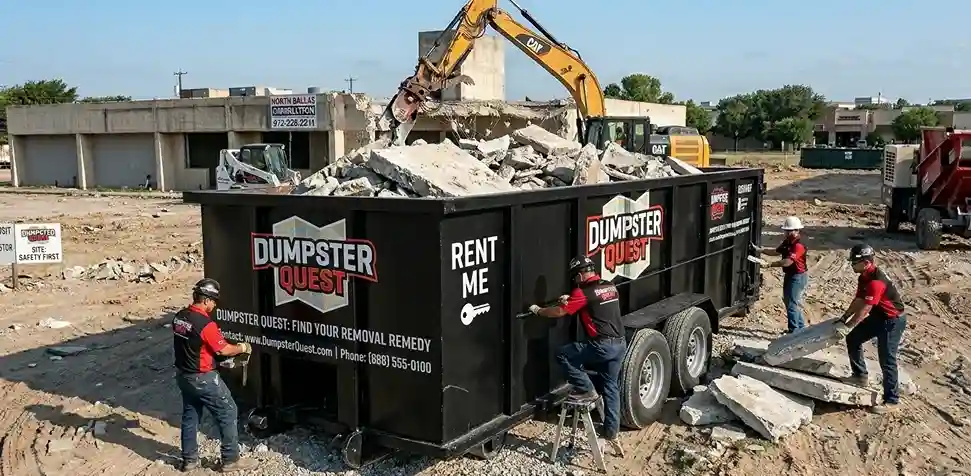
After that experience, the project manager switched to recommending a 10-yard dumpster for most full concrete driveways, showing that weight, not space, is the real deciding factor.
What Size Dumpster Do I Need for Concrete Safe Cleanup
Knowing what size dumpster I need for concrete is essential for safely handling heavy debris while avoiding unnecessary costs and project delays. Because concrete is dense and quickly reaches weight limits, selecting the right dumpster size and the right dumpster rental for heavy materials, helps ensure smooth disposal. The right choice ensures proper weight management, faster and more efficient project completion, and fewer delays or unexpected fees.
Get the Right Dumpster Size for Your Concrete Project
Choosing the correct dumpster size for concrete is essential to avoid overweight fees, pickup delays, and project disruptions. Because concrete is heavy and quickly reaches load limits, getting the sizing right from the start keeps your cleanup on schedule, helps control costs, and prevents avoidable delays.
Dumpster Quest offers dumpster rentals specifically suited for heavy materials like concrete, helping homeowners and contractors in North Dallas select the right 10–20 yard container for their project. Visit the Dumpster Quest homepage or contact their team today to get a recommendation and schedule your rental.
Frequently Asked Questions
1. What Is a Concrete Dumpster and When Do You Need One?
A concrete dumpster is a specialised container designed for heavy materials like concrete, brick, and asphalt. You need one during demolition, driveway removal, or construction projects where standard dumpsters cannot safely handle the weight.
2. How much concrete can a dumpster hold?
A dumpster can hold about 2 to 6 tons of concrete, depending on its size. Smaller 10-yard dumpsters typically handle around 2–4 tons, while larger 20-yard containers may hold up to 6 tons, but weight limits are usually the main restriction before space runs out. See our full breakdown of how much concrete a dumpster can hold for size-by-size capacities.
3. How Much Does a Concrete Dumpster Rental Cost?
Concrete dumpster rental typically ranges from $300 to $900 depending on size, capacity limits, location, and rental duration. Heavier loads and longer rentals may increase costs check our concrete dumpster rental cost guide for a detailed pricing breakdown.
4. Can You Put Concrete and Other Debris in the Same Dumpster?
In many cases, concrete must be separated from other materials. Mixing debris can result in additional fees or require a different type of dumpster based on local disposal regulations. Learn more about mixing concrete and other debris in one dumpster and when separation is required.
5. Do Concrete Dumpsters Have Strict Weight Limits?
Yes, they are designed with strict limits to ensure safe transportation. Exceeding these limits can lead to overage charges and safety concerns.
Key Takeaways
- Use smaller dumpsters for concrete since weight adds up quickly
- Most concrete projects are best handled with 10–20 yard dumpsters
- Always prioritize weight limits over dumpster volume to avoid extra fees
- Plan for multiple hauls if you’re handling a large demolition or driveway removal
- Estimate your debris early to prevent delays, added costs, or rejected pickups