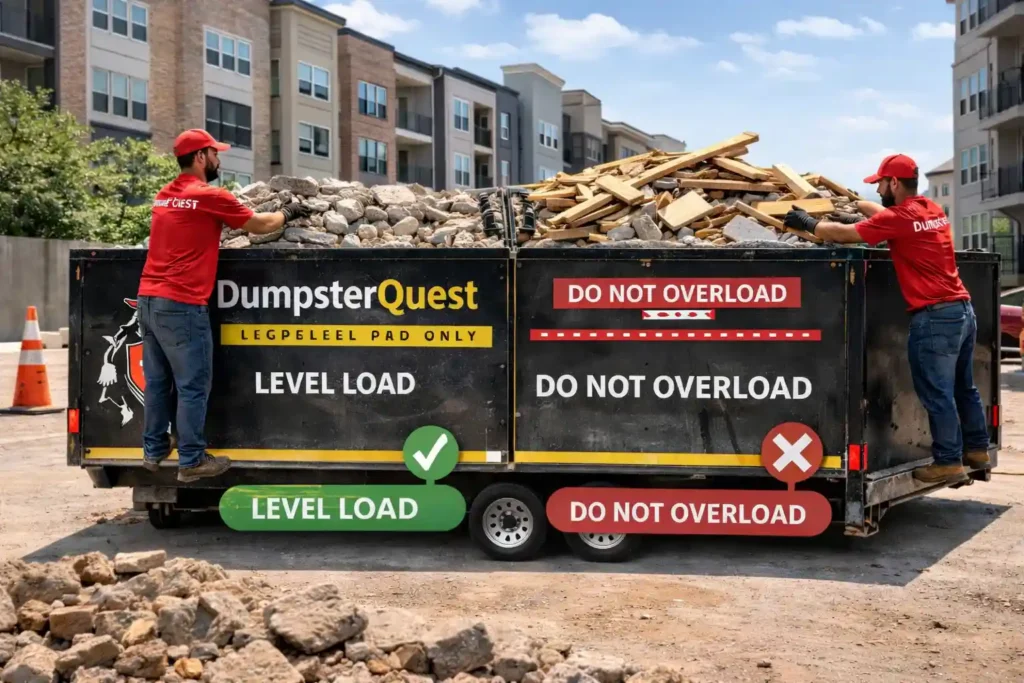
In most cases, you should not mix concrete with other debris in the same dumpster due to weight limits and disposal rules. Some providers allow it with restrictions, but it often leads to higher costs or additional fees. In this guide, you’ll learn when mixing is allowed, what rules to follow, and how to avoid extra charges.
Should You Mix Concrete and Other Debris in One Dumpster?
When starting a renovation or demolition project, a common question is: can you put concrete and other debris in the same dumpster without running into issues? While combining materials may seem convenient, it often leads to problems with weight limits, disposal regulations, and added fees.
Concrete is significantly heavier than most construction debris, so mixing it with other materials can quickly exceed allowed limits or require special handling. Understanding these restrictions helps you avoid unexpected costs and keep your project running smoothly. In many cases, separating concrete from other debris is the more efficient and budget-friendly option, especially for larger jobs.
For North Dallas projects, providers like Dumpster Quest can offer guidance on proper disposal practices and help you determine when separating materials is necessary to prevent delays or extra charges.
Why Properly Separating Concrete and Debris Matters
Understanding whether you can mix materials isn’t just a minor detail, it can directly impact your project’s cost, timeline, and overall efficiency. Throwing concrete and other debris into the same dumpster without knowing the rules can quickly create avoidable problems, including:
- Overweight charges from exceeding dumpster limits
- Rejection at disposal or recycling facilities
- Additional sorting or contamination fees
- Delays that disrupt your project schedule
On the other hand, taking the time to separate materials properly offers clear advantages. It helps ensure accurate pricing from the start, makes disposal smoother and more predictable, and keeps you compliant with local regulations. More importantly, it supports a more efficient workflow, allowing your project to stay on track without unexpected setbacks.
When Is It Okay to Mix Concrete with Other Debris?
While it’s often recommended to keep material separation, there are situations where mixing concrete with other debris may be allowed, depending on your provider and local disposal rules.
1. Allowed by Some Dumpster Providers
Certain companies offer mixed debris dumpsters that can include small amounts of concrete. However, there are important conditions:
- Stricter weight limits for dumpsters due to the heaviness of concrete
- Higher disposal costs compared to separated loads
- Careful load distribution to avoid exceeding limits on one side
2. When Concrete Is Only a Small Portion
If concrete makes up a minor part of your total waste, some providers may allow it in a general dumpster. The key is keeping the volume low enough that it doesn’t significantly increase the overall weight.
3. Facilities That Accept Mixed Loads
Some disposal or recycling facilities are equipped to handle mixed materials, including concrete. However, acceptance policies vary widely by location, so what works in one area may not be allowed in another.
Before combining materials, always confirm with your dumpster provider to ensure you meet their specific guidelines and avoid unexpected fees or rejected loads.
When You Should NOT Mix Concrete with Other Debris
In many situations, combining concrete with other materials can cause more problems than it solves. Knowing when to keep them separate is key to avoiding extra costs and compliance issues.
- Large Volumes of Concrete: If your project generates a significant amount of concrete, it should always go into a dedicated dumpster. Heavy loads can quickly exceed weight limits, making mixed containers impractical and expensive.
- Strict Disposal and Recycling Requirements: Many recycling facilities only accept clean concrete for processing. Mixing it with other debris can lead to rejected loads or additional sorting fees, which can slow down your project and increase costs.
- Risk of Exceeding Weight Limits: Concrete is extremely dense, so even a partially filled dumpster can become overweight. Mixing it with lighter materials often leads to exceeding allowable limits, resulting in overage charges or the need to offload and reorganize waste.
To avoid these issues, it’s generally best to keep material separation for concrete, especially for larger or regulated projects, so you stay within limits and ensure smoother disposal.
Comparison Table Mixed vs Separate Dumpsters
| Type | Best For | Pros | Cons |
| Mixed Debris Dumpster | Small projects | Convenient | Higher cost risk |
| Concrete Only Dumpster | Heavy materials | Lower weight risk | Requires separation |
| Multiple Dumpsters | Large projects | Efficient disposal | More planning needed |
Expert Insight from Dumpster Quest
From real-world experience, Dumpster Quest has found that mixing concrete with other debris is one of the most common causes of unexpected fees.
Key recommendations include:
- Use dedicated concrete dumpsters for heavy materials
- Avoid mixing unless explicitly allowed
- Plan loads based on weight, not just volume
This approach helps customers maintain budget control and avoid delays.
Can You Put Concrete and Other Debris in the Same Dumpster Without Extra Costs or Issues
Whether you can put concrete and other debris in the same dumpster depends on your project size, material weight, and your provider’s rules. While some situations allow limited mixing, it often comes with strict restrictions and potential added costs.
In most cases, separating materials is the safer and more cost-effective option. It helps you avoid overweight charges and stay compliant with disposal regulations.
Get the Right Dumpster Setup for Your Project
Choosing the right dumpster setup from the start can help you save money and avoid unnecessary headaches throughout your project. Proper planning ensures your materials are handled correctly and your project stays on schedule.
Get expert guidance to help you choose the best disposal option for your specific needs. Visit the Dumpster Quest homepage or contact their team directly to get personalized recommendations for your project.
Frequently Asked Questions
1. What Is a Concrete Dumpster and When Do You Need One?
A concrete dumpster is designed for heavy materials like concrete, brick, and asphalt. You need one for demolition, driveway removal, or projects involving large volumes of dense debris that standard dumpsters cannot safely handle.
2. What Size Dumpster Do I Need for Concrete
Most projects require 10 to 20 yard dumpsters. Smaller sizes are preferred because they help manage weight limits and reduce the risk of exceeding allowable tonnage during heavy debris disposal.
3. How Much Concrete Can a Dumpster Hold
A typical 10 yard dumpster holds about 2 to 4 tons of concrete. Even if there is space left, weight limits usually prevent filling the container completely with heavy materials.
4. How Much Does a Concrete Dumpster Rental Cost
Concrete dumpster rental typically ranges from $300 to $900 depending on size, weight limits, and location. Heavy materials may increase costs due to disposal fees and stricter weight restrictions.
5. Can You Mix Concrete With Other Construction Debris
Sometimes small amounts are allowed, but large quantities should be separated. Mixing can lead to higher costs, overweight charges, or rejection at disposal facilities depending on provider policies.
6. Why Do Companies Require Separate Concrete Dumpsters
Separate dumpsters make recycling easier and prevent contamination. Clean concrete can often be reused, while mixed debris requires additional processing and disposal costs.
Key Takeaways
- Mixing concrete with other debris is usually not recommended
- Weight limits are the biggest concern
- Separate dumpsters often reduce costs
- Always confirm rules with your provider
- Proper planning prevents delays and extra fees